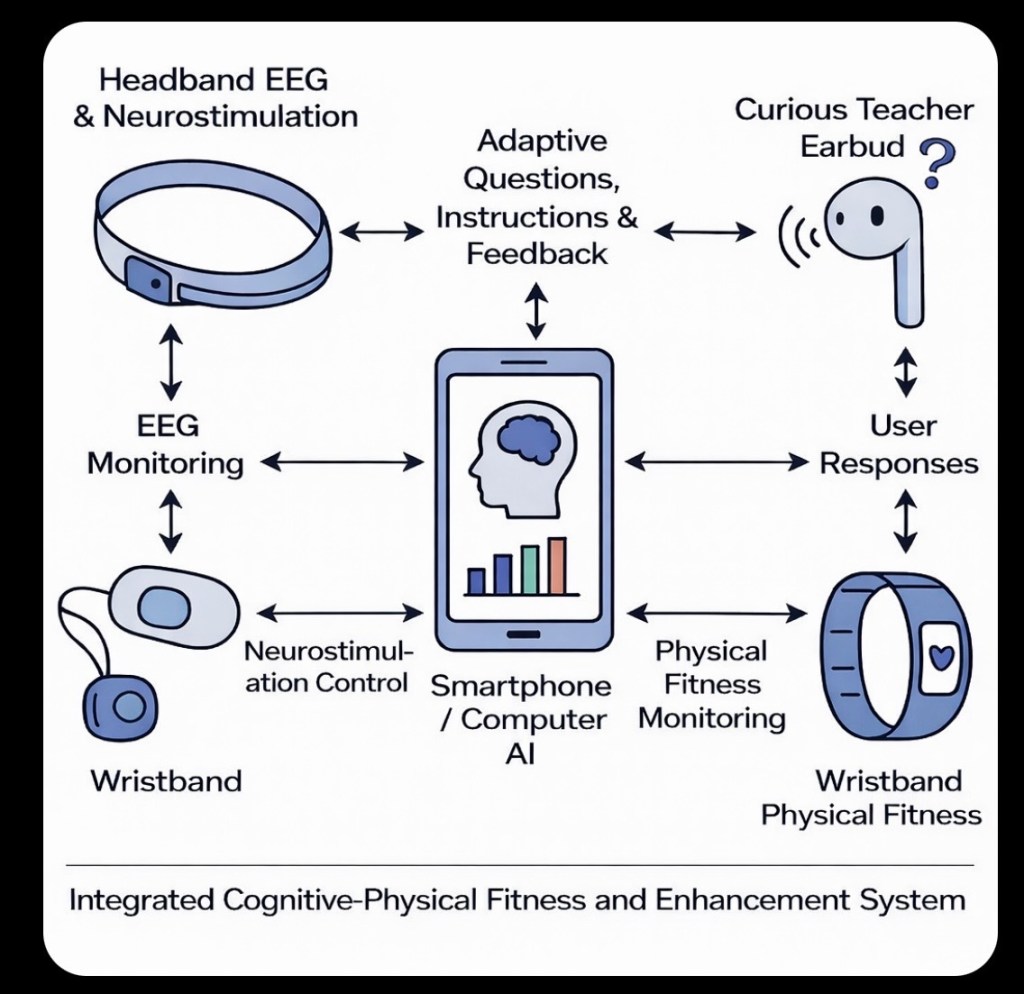
I’m writing this post not simply to make a request, but to begin a quest. Five years ago, I set out to find a technological way to prevent—or at least slow—the accumulation of harmful debris in the human brain. What began as a question has gradually taken shape into something more concrete: a direction that may be both ambitious and achievable.
We live in a time when technology is capable of solving problems once thought impossible. But some challenges are not waiting for a single breakthrough—they are waiting for the right integration of what already exists. This may be one of those cases.
The Problem Hidden in Plain Sight
At the center of this issue is the brain’s own cleaning system. Researchers have identified what is known as the glymphatic system—a network that clears metabolic waste from the brain, primarily during deep sleep. When functioning properly, it helps remove harmful proteins, including amyloid plaques associated with Alzheimer’s disease and other neurodegenerative conditions.
But this system is not constant. It depends heavily on slow-wave sleep. As we age, sleep becomes less efficient. Deep sleep diminishes. And with it, the brain’s ability to clear waste declines. The result is not immediate failure, but gradual accumulation—damage that builds silently over years, even decades.
Additional research has highlighted lymphatic pathways along the brain’s surface, reinforcing the importance of fluid movement in maintaining neurological health. Taken together, the picture is clear: The brain already has a way to clean itself. It just doesn’t always do it well enough.
A Direction Worth Building
So the question becomes: what if we could help it? What if we could enhance the brain’s natural cleaning process by strengthening the conditions under which it works best? One promising direction is the enhancement of slow-wave activity during sleep—the very state in which glymphatic clearance is most active.
A system designed around this idea might include:
EEG-based monitoring to track brainwave activity in real time
Targeted neurostimulation to reinforce slow-wave patterns
Adaptive feedback loops to continuously optimize the process
This would not override the brain—it would work with it. A closed-loop system designed to support a function the body already performs, but imperfectly. None of these components are science fiction. Variations of each already exist in research labs and early-stage technologies. What does not yet exist is their integration around this specific goal. That is the opportunity.
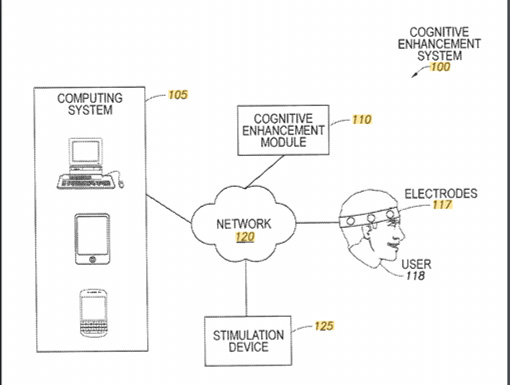
inventors Charles J. Chase, Gerold Yonas, US9943698B2
Why This Matters
If successful, this approach could shift how we think about neurodegenerative disease—not simply treating symptoms after the fact, but intervening earlier, at the level of underlying biological maintenance. It is not a cure. But it may be a meaningful step toward prevention—or delay. And given the scale of these diseases, even incremental progress matters.
This Is Where It Needs to Move Forward
At this point, the limiting factor is no longer the idea. It is execution. The pieces are already on the table. The science is real. The technologies are real. What is missing is the decision to bring them together and test whether this can work in practice.
So let me be direct. This is an open call to the people who can build this. If you are a neuroscientist, biomedical engineer, sleep researcher, or technologist working with EEG, neurostimulation, or brain–computer interfaces—this is your domain.
If you have experience turning early-stage concepts into prototypes, even better. Because what’s needed now is not more speculation. It’s action:
A technical conversation
A feasibility assessment
A first prototype
A small, focused study
Something that moves this from idea to evidence. This does not require a massive institution to begin. It requires a small number of capable people deciding the question is worth answering. Because it is.
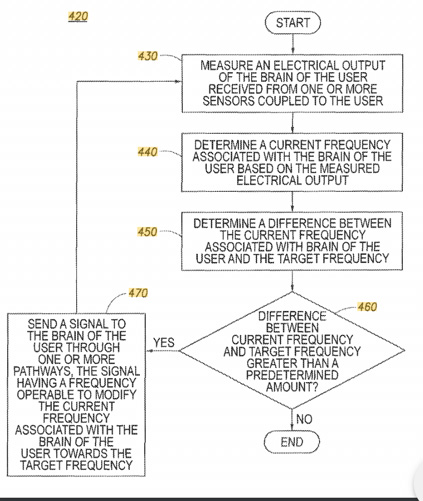
inventors Charles J. Chase, Gerold Yonas, US9943698B2
There is a tendency to wait—for more data, more funding, more certainty. But many meaningful advances begin before those things are fully in place. This could be one of them. If this idea aligns with your expertise, your curiosity, or your sense of what should be built next—don’t ignore that. Reach out. Start the conversation. Take the first step.
Because at this point, the real question is no longer whether this is possible. It’s whether someone is willing to try.
References & Further Reading
Xie, L. et al. (2013). Sleep drives metabolite clearance from the adult brain. Science.
Nedergaard, M. (2013). Garbage truck of the brain. Science.
Iliff, J.J. et al. (2012). A paravascular pathway facilitates CSF flow through the brain
parenchyma. Science Translational Medicine.
Louveau, A. et al. (2015). Structural and functional features of central nervous system
lymphatic vessels. Nature.
Fultz, N.E. et al. (2019). Coupled electrophysiological, hemodynamic, and cerebrospinal
fluid oscillations in human sleep. Science.
Ngo, H.-V.V. et al. (2013). Auditory closed-loop stimulation of the sleep slow oscillation
enhances memory. Neuron.
Tononi, G. & Cirelli, C. (2014). Sleep and the price of plasticity: from synaptic
homeostasis to memory consolidation. Neuron.