
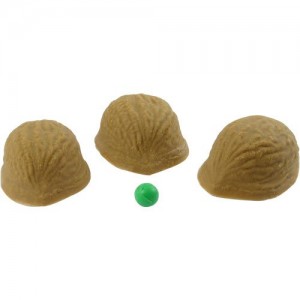
 According to Chinese general, military strategist, and philosopher Sun Tzu, “All warfare is based on deception.” The classic shell game uses three walnut shells and a pea to deceive the victim of the scam. The crook uses slight of hand to disguise the rapid moves. In mid course missile defense the reentry vehicle (RV) is the pea and the walnut shells are lightweight balloons. The slight of hand is to make each of the balloons look slightly different from all of the others. The game gets more challenging by spreading out the balloons so the observer can’t attack all of them. So one approach to defeat the balloons is to wait until the threat cloud reenters the atmosphere so the light weight objects slow down leaving only the RV to be attacked with an atmospheric interceptor like Terminal High Altitude Area Defense or THAAD, which works for a limited area.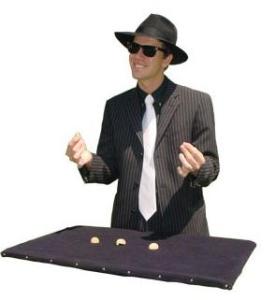
Wide area defense requires that either the defense discriminates the empty balloons in mid course or attacks the booster before it can deploy the threat objects. Every booster would have to be attacked and launching many at once from a limited area challenges the boost phase interceptors. If the boosters are driven around, maybe in extensive underground tunnels, the trucks can be the shells hiding the real booster. The key to defense is sensors that can observe and discriminate in all phases including preparations for the attack, and the latest development of swarms of satellites is the key to discrimination.
I will write more about satellites later, then more regarding the vital issue of information and 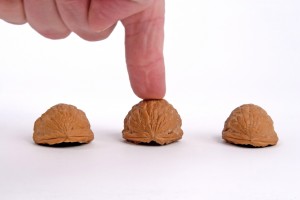 battle management software. Does the street smart trickster win the shell game? We can only answer with tests of the defense system in the face of a credible “red team” of attackers….using realistic computer simulations. But how do we test the software against accidental faults or determined hackers who hide their moves under more shells?
 SDI Guy