The Here After

As I approach my 85th birthday, I notice that I am spending more time thinking about the hereafter.

This often happens when Jane asks me to go get something from the garage, and (although I don’t respond fast enough to suit her) eventually I wander into the garage and take a look around. Then I exclaim to myself:  What am I here after?

I have concluded this is a symptom of mild (I hope) cognitive decline that I have been studying by reading the neuro literature related to brainwave entrainment. This has been a primary subject of my study for the last 15 years.

I became interested in the brain and the subject of decision making under stress as related to the various defense committees I have served on. Through this study, I became convinced that the advanced technology of warfighting, such as high-power lasers, was not as important as the technology of the brain performance in warfighting. Ten years ago, I even convinced the Lockheed Martin Skunk Works to obtain a patent for my concept of cognitive enhancement using brainwave entrainment (Cognitive Enhancement Using Feedback, US 20150297108A1).

Since then, I have become convinced that cognitive enhancement is extremely important for us old folks. The literature on the aging brain is fairly extensive, documenting that the normal brain undergoes a decline in fast reasoning and memory retention with age. Some humans go downhill faster than others. The number of old folks who start with cognitive deficiency, then encounter early dementia, then Alzheimer’s, seems to me to be an increasingly serious societal, political and financial problem. Modern medicine has been able to keep us old folks physically healthy, but what about the brain?

Then 10 years ago, I happened to stumble through the vast neurotech literature and found the brilliant and groundbreaking work of Maiken Nedergaard. Her review paper in 2020 persuaded me that she has figured out a critical problem and hinted at the solution.

I quote the key idea from her work: “Sleep quality decreases as we age, and disruption of the regular sleep architecture is a frequent antecedent to the onset of dementia in neurodegenerative diseases. The glymphatic system degrades with age, suggesting a causal relationship between sleep disturbance and symptomatic progression in the neurodegenerative dementias.” She goes on to say, “Glymphatic failure may constitute a therapeutically targetable final common pathway.”

Nedergaard has become widely recognized for her discovery of the connection between sleep and brain disease, and she recently received an award from the Human Frontier Science Program that states her research has “forever changed the way we understand sleep as an essential biological function that promotes brain health.” Now the National Institutes of Health (NIH) has awarded $15 million to a team of researchers led by Nedergaard to improve the complex processes of brain cleaning. This could provide a pathway for dealing with the increasing widespread tragedy of Alzheimer’s disease, 

Before I learned about the work of Nerdergaard, I found literature from almost 15 years ago that showed that strong slow wave brain oscillation and enhanced glymphatic flow could be triggered with an oscillating electric field that entrained slow brain waves. I gave presentation at a neurotech conference 10 years ago at the Potomac Institute for Policy Studies entitled (with some humor) “Zap Your Way to Enhancement.” I suggested that slow wave sleep could be enhanced using noninvasive use of alternating current. I envisioned a practical sleep enhancement application, which I called the ZZZapcap.

I am increasingly hopeful that a product such as the ZZZapcap could be made available to the public soon.  I am suggesting that my patent that provides a concept for using feedback to entrain one hertz brain waves could be used to enhance glymphatic flow and clean the brain of the amyloid buildup, and thus prevent dementia and Alzheimer’s.
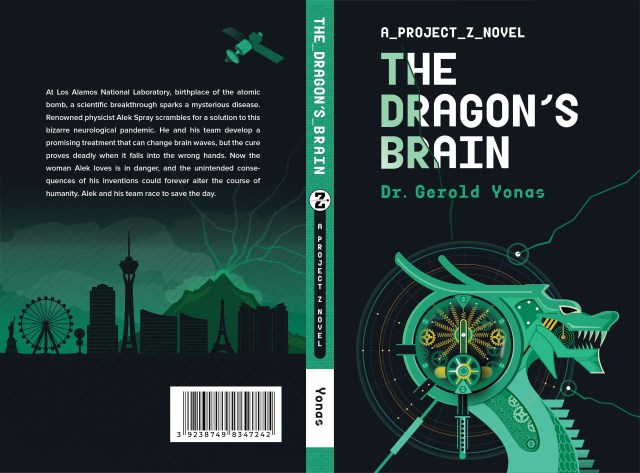
Since I have no environment to try out this concept, I have resorted to writing fiction to explore my ideas. My soon-to-be published novel, The Dragon’s Brain, delves into the idea of brainwave entrainment. The heroine of the story recovers from a coma after using what I call the Brainaid. Look for The Dragon’s Brain in bookstores this October and get in touch if you know anyone with the connections and capacity to make this revolutionary product a reality.


Glymphatic failure as a final common pathway to dementia – PubMed

Sleep is evolutionarily conserved across all species, and impaired sleep is a common trait of the diseased brain. Sleep quality decreases as we age, and disruption of the regular sleep architecture is a frequent antecedent to the onset of dementia in neurodegenerative diseases. The glymphatic system …
— Read on pubmed.ncbi.nlm.nih.gov/33004510/

The Russian Nuclear Space Weapon

After Mike Turner, the chair of the House Intelligence Committee, warned the public about what he called a “serious national security threat,” and the White House confirmed that the Russians are developing a “troubling anti satellite weapon,” I was motivated to add some historical perspective based on my study of directed energy weapons. 

Garin Death Ray

HG Wells was the first to invent the concept of directed energy weapons also known as death rays in his 1898 sci-fi novel “The War of the Worlds.” He was far ahead of his time. The Soviets were next to join the death ray fiction world. In the 1920s, Alexsey Tolstoy published a sci-fi novel, “Garin’s Death Ray,” that focused not just on the weapon, but also the psychology of the inventor. The novel attracted the attention of the Russian military, but the non-technical issues were prophetic. The hero of the book, Garin, described his invention of a beam weapon that was incredibly destructive, but it also had many detractors that claimed, “This invention smells of higher politics.” 

After the recent revelations, CNN published their “exclusive account” that, “Russia is attempting to develop a nuclear space weapon to destroy satellites with a massive energy wave when detonated potentially crippling a vast swath of the commercial and government satellites that would cross a dangerous Rubicon in the history of nuclear weapons, disruptions to everyday life.” The story was picked up in the European “Pravda” that reported, “The weapon has the potential to destroy entire groups of small satellites such as Space X’s Starlink used by Ukraine in the war with Russia……and Moscow perceives the U.S. statements as attempt to persuade Republicans in Congress to approve assistance for Ukraine.”

This revelation had similarities to my 2023 science fiction techno thriller “The Dragon’s CLAW” that describes a test of a secret low energy nuclear (cold fusion) weapon initially discovered at Los Alamos and stolen by the Chinese and tested for the first time on a remote island in the Pacific with surprising results. I wrote: “The results of the first trial of the Dragon’s CLAW had exceeded all of the researchers’ expectations, but not in a good way. The energy output was 10 times higher than anticipated, and it had created a giant electromagnetic pulse…revealed the existence of a new, tremendously energetic and very dangerous device…. could destroy any nation’s electric grid infrastructure and all space-based communication, along with GPS”.

I wondered if not just Tolstoy, but both CNN as well as my fiction invention were examples of imagination. Then I remembered something about the Soviet secret program I had learned from Sidney Drell, Stanford physics professor and arms control expert, when I was researching the impact of Reagan’s Star Wars program on the end of the Cold War. I documented this in my autobiographical SDI story, “Death Rays and Delusions.”  I learned from the information published in 2007 by Drell and George Shultz, former secretary of state, who was directly involved in the Reykjavik Reagan/Gorbachev summit in 1986, that the Russians were very aware and concerned about the development of nuclear driven electromagnetic weapons.  

Gorbachev was told that that the United States was developing nuclear driven directed energy weapons. He was informed that the “design concept for directed nuclear weapons, work on which began in the U.S. in the 1970s…. weapons consist in transforming part of the energy from a nuclear explosion into powerful streams of directed x-rays or electromagnetic radiation or a stream of high energy particles. No less than three tests were conducted towards the creation of directed electromagnetic radiation weapons.”

He was also told, “Full scale development of these weapons is expected to occur in the second half of the 1990s.” Gorbachev was encouraged to negotiate a “ban on nuclear testing to prevent full scale development of directed energy weapons,” and prevent “military technical superiority of the U.S. in the development of munitions of the new generation for strategic weapons is concerned.” The Soviets’ concern about the possible development of nuclear directed energy weapons continued in the 1990s as evidenced by the writings of the head of the nuclear weapon program who in 1996 called for the end of development of such weapons that he called “an evil Jinn.” 

In my novel, “The Dragon’s CLAW,” the fictional Los Alamos lab director successfully argued, “This is the ideal moment to admit that the competition over space weapons would ultimately be mutually destructive for both countries… We must draft an agreement to end all space weapons development and cooperate with energy research. The future of humanity depends on us.”

I was surprised when my fiction seemed to match some of the recent CNN revelations, but I admit that my creativity can hardly keep up with the thinking of energy weapon advocates that continue to be intrigued by new ideas related to powerful laser death rays and microwave weapons. Some claim that such energy beams are the cause of the Havana Syndrome that messes up the minds of “2000 U.S.  officials in diplomatic posts worldwide … .and a CIA panel of experts concluded some of these have as a plausible explanation a directed pulsed radio frequency energy.” A microwave expert, James Benford, stated the syndrome, “certainly fits with a microwave beam as the attacking element,” but he nor the CIA suggested who might be the supposed foreign adversary. 

I will leave it to the reader of my series of books (see projectzbooks.com), to find out what happens in the world of fictional electromagnetic brain weapons, but the technology development and its consequences continues in my next book “The Dragon’s Brain” to be published in September. My novel describes how electromagnetic energy weapons can attack not just space satellites, but also the minds of diplomats and even the entire population of the world. Who knows, where fiction ends and reality emerges, but the work of HG Wells told us to be prepared for inventions we can hardly imagine.

The importance of having a coach

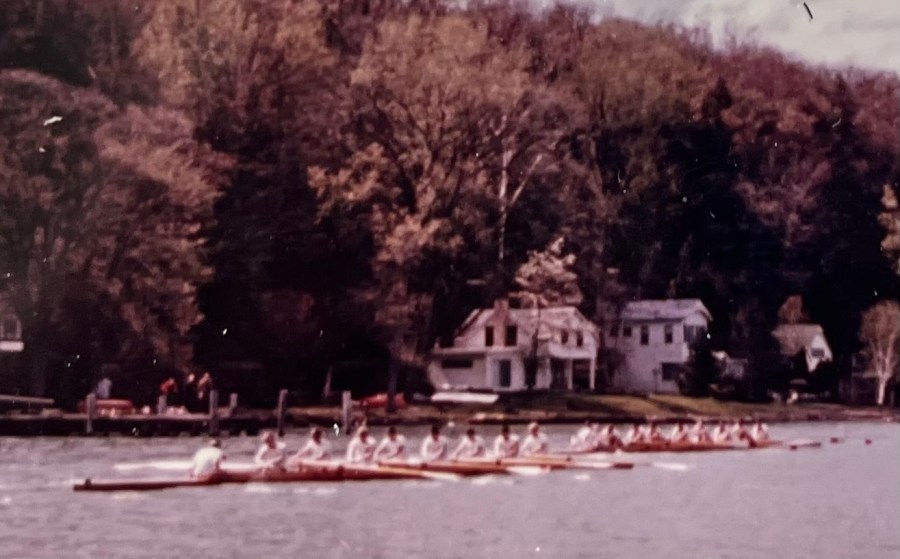
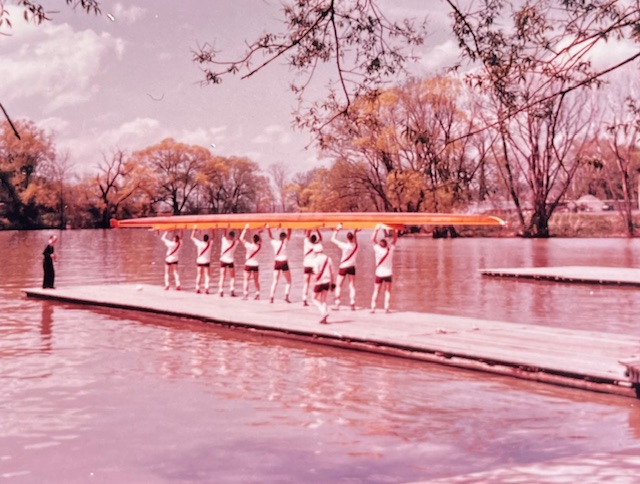
I first learned about the importance of the coach during my four years rowing an eight-oar competitive racing shell at Cornell University. This story began when I was fresh out of high school in Ohio and went off to Ithaca, New York to attend college. It was September 1957, and I was not sure I was in the right place as I looked around nervously in a long Cornell University freshman registration line. Somebody walked up to me, an obviously self-confident upper classman that I assumed wanted to help me, and he said, “Want to join the Cornell crew?” 

The upper classman seemed to be an authority. He instructed me to show up at the boathouse that afternoon. I had no experience in the sport of competitive rowing, and my only activity even related to sports was playing the clarinet in the high school band at football games. Mostly out of curiosity, I showed up with several dozen others, many of whom (unlike me) appeared to know what they were doing. I soon learned that they had rowed in prep school.  Cornell was recruiting rowers for the lightweight crew, where the average weight was 150 pounds with a max of 160 pounds, so they needed to have some to come in at 145 pounds or lower. Apparently, I looked like the skinny kid that might be able to teach how to row.

We spent the next few weeks getting lessons from the experienced coach, and rowing very slowly up and down the Ithaca inlet in what was called the barge with 16 rowers in the boat. Our numbers had been reduced. The preppies were off, and what remained was a group of scruffy inexperienced kids trying to fit it to a new environment. We were a bunch of exhausted freshmen getting used to new classes and fatigue. We struggled together in a rather undistinguished craft. Many of us were getting ready to give up, but there was something about the patient, forceful, and calm instructions from that the coach that encouraged me. This was the sport for me.

Then we were introduced to a magnificent eight-oared, thin-walled, cedar shell. We rowed on Lake Cayuga until the glorious fall weather turned into freezing rain and rapidly dropping temperatures. Winter arrived, and we were assigned to the “tanks” in the campus gym. We were sitting on slides with water flowing past on two sides. Our oars had large holes in the blades, so the water resistance was as if we were on the water.

I had a lot to learn, and I was worried that I would not make the cut. Nevertheless, I was completely impressed by the coach who I believed wanted me to succeed. The coach often watched from within a foot away from my hands, carefully explaining the complex motions I had to repeat over and over again for what seemed like hours. One problem I experienced was that the skin of my hands was a bit too delicate for this sport. Before long, my hands were bloody pulp. I could barely hold a fork at the training table, but my coach never seemed to notice the blood stains on my old sweatshirt since. The mission was made clear, we had to learn to row, and learn to win. Racing would begin when the snow melted, and we would face competition on Lake Cayuga.  

I had little time nor interest in anything but rowing. I had already decided that I was not happy with studying mechanical engineering, which seemed dull. One early morning I walked down the tree-lined street to the Physics building. One of my fellow rowers had told me about a new Cornell program called Engineering Physics that offered the challenge of a more exciting set of courses.  The dean was my second experience with a respected coach. The dean told me the program would require be five years instead of four, but in addition to studying physics and engineering, the extra year would be a collection of the very best liberal arts courses at Cornell. I was instantly convinced by his description of the challenges ahead.

I got used to rowing, the training table, an early curfew, and limited time for studying. I learned how to use my time for studying efficiently, and I managed to get better grades than most of my friends in our fraternity. My grades were not fantastic, but they were up there with other crew members. I even made Dean’s list.

Eventually spring emerged and we went back on the lake with an occasional thin sheet of ice delicately cracking on the side of the shell. Then came spring vacation, where practically everybody left the campus, but the crews were told we would stay on campus and row for mile after mile in the morning and afternoon to harden up for competition.

As we first glided down the inlet toward the lake, my hands already toughened up from rowing in the tanks, I felt optimistic. Then, two weeks on the lake turned my hands back to the bloody pulps. I eventually got used to the pain in my hands because there was much more pain in the rest of my body. There was also the unbelievably mystical sweeping sound as we cut through the light waves. The soaring feeling of eight of us responding in unison to the yells of the coxswain, “up two in five” and pounding the side of the shell with wooden rods. Our coach followed in a small launch instructing all of us with a calm but convincing set of commands.

I was never particularly good at the sport, but I was totally dedicated. My coach really appreciated my total commitment and my competitive spirit. He even gave me a couple of awards, including, in my senior year, the Cornell C embroidered on a white wool crew neck sweater (that I could not put on today with a crowbar). I retired from crew after my senior year with a couple of trophy oars and a silver bowl that my coach called the “competitors cup.” When we did win some races, the losing crew would give us their shirts. (Although Yale somehow managed to avoid that custom.)

From rowing crew, I learned a lot that applied over the next several decades of working on mostly impossible challenges such as giant pulsed power machines, fusion, missile defense, death rays, and enhanced cognition, working with the government, laboratories, and industry. I believe that my most important lesson from crew was the importance of having a person I reported to that I respected and trusted. I never thought of that person as a boss but rather as my coach. We shared goals and a desire to win.

One of my favorite coaches during my career was Air Force General James Abrahamson who recruited me to be his depute and chief scientist when he was chosen to head the Strategic Defense Initiative Organization, also known as Reagan’s Star Wars program. He was as new to high powered lasers as I was to the military, but we learned from and trusted each other, and he tolerated my jokes.

Recently my coach at Sandia, Al Narath passed away, and I was fortunate to attend his 90th birthday party and was able to express my feelings about him at his memorial ceremony. I knew from four years on rowing, and for the rest of my career, what it was like to have that very special coach. My coaches always made the major difference in my work. As long as we shared goals, mutual respect, trust, and open communication, I was able to contribute to my fullest to a shared success that included the entire team. I learned that crew is successful when the only outstanding person on the team is no one, but also everyone. The result was a team that shared the same beliefs, feelings for each other, and dedication that resulted in open communication and trust, which the coach shared with us. Every day after practice we all experienced a combination of exhaustion and exhilaration. When we won, we sang the Cornell Crew song together as loudly as we could: “Onward like a swallow going…. rest was made for feebler folk….and for fame of Alma Mater. Stroke, stroke, stroke.”