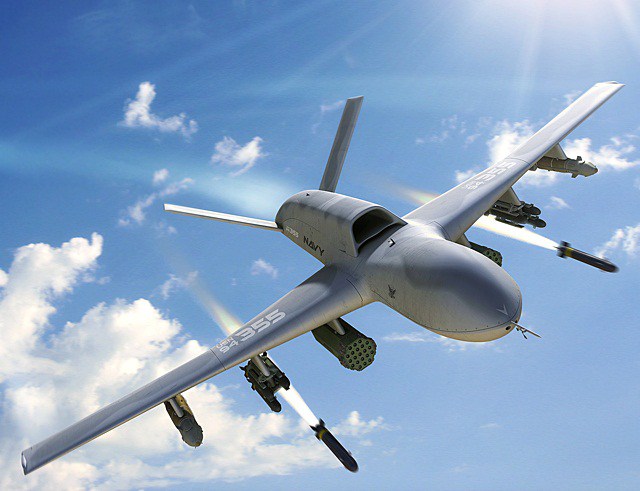
A simple, low cost, really nasty new weapon system

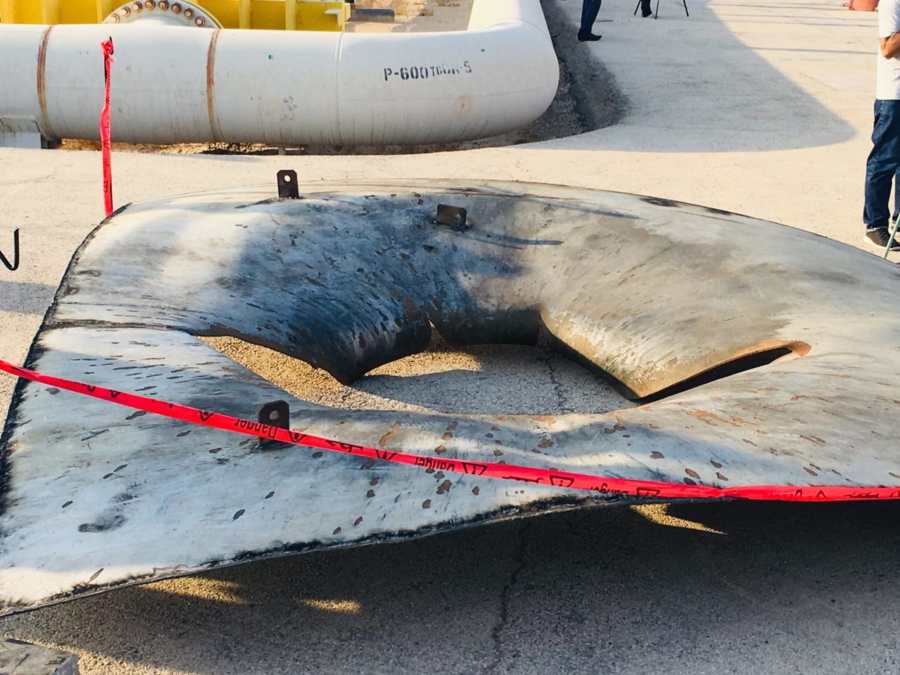
Precision drone attack damage of Saudi Oil facility

Could low cost, fairly low tech aircraft defeat the very expensive missile defense system of Saudi Arabia?  Of course not! No way, I thought, since the Saudis rely on our technology and we have spent billions and billions on missile defense since we began the SDI program in 1984.

I never gave this possible threat much thought until the Saudis’ giant oil facility was attacked with high precision on Sept. 14, causing enough damage to measurably reduce the global oil supply.

Yes there was a fairly modern missile defense system in place, but the attack came from tens of small low-flying drones and cruise missiles proving that the best defense against the wrong attack is useless. It looks like I was not the only one surprised since Israel, who should have been the most alert to such threats, has just announced they are reacting to this event. (“Netanyahu seeks billions to fund Israeli defense against Iranian cruise missiles,” Haaretz, Oct. 07, 2019.) Even before that, the Russians announced in Izvestia that their small multi rotor drones “will perform not only reconnaissance missions, but also strike targets with miniature bombs.”

I recall that when the SDI was created, the secretary of state raised the issue of cruise missile defense, but his question was never seriously answered and we focused on the Soviets’ huge investment in intercontinental ballistic missiles. So this new threat is not so new, but I hope the new aspect of swarms of low-cost drones is now being taken seriously.

This wake-up call up call should now be loud and clear, but even worse than we expected, since even though the cost of cruise missiles is very high, the technology and cost of swarms of drones has become very attractive worldwide to even capable individuals. It is now realistic that many of the world’s soft targets, such as cities, are vulnerable to attack. But certainly we could use electromagnetic weapons to jam, confuse, take over or destroy the guidance and communications of drones, high power lasers to destroy their delicate components or just plain old intercept missiles and anti-aircraft guns to blow them out of the sky, so not to worry.  We could even deploy our own swarms of defense drones to attack their offense swarms.

Well, it is not that simple since the real issue is the cost exchange, and the low cost and tactics available to giant swarms of drones could reduce the effectiveness of most of tomorrow’s technologically available defenses.

In addition, there is the element of surprise, demanding an early warning detection and tracking system, as well as the reality of exhaustion of the defense against fake or real repeated attacks. But we know that each low-cost drone could only deliver a pound or so to a target, so what is the big deal? Well, maybe the drones could target critical parts of our exposed electric grid, or maybe disperse biological agents along major streets, or target large sports events with hundreds of grenades or just go after parking lots at crowded shopping centers? The implication of such terror weapons are frightening to say the least.

Certainly Israel has some not so friendly neighbors, and their enemies must be preparing such killer drone swarm attacks, but we don’t have such problems from our neighbors .…  unless the drones are delivered from ships near the big cities near our coasts.

So what to do about all of these new concerns about a threat that might be more likely than intercontinental missile attack that attracted our defense community for decades?  I am sure the Pentagon, the labs and the defense industry are working to figure out our response. Of course, the threat will evolve as well as the defenses, and we need to also prepare for simultaneous info and space attacks, so we may look on the simplicity of the good old days with nostalgia.


 

Herbert_York

“The Fallacy of the Last Move”

One of the military technology as well as arms control leaders at the end of the last century was Herb York. He always argued for weapons technology development based on good physics, and at the same time emphasized arms control based on mutual understanding between the U.S. and our adversaries. He made it clear in his 1995 book, “Arms and the Physicist,” that arms control agreements were hampered by the “fallacy of the last move.” He wrote, “We are confronted by the dilemma of steadily decreasing national security … this dilemma has no technology solution.”

I had reached a similar conclusion ten years before that.  After Reagan called for the initiation of the missile defense “Star Wars” program, the Fletcher panel was organized in the summer of 1983 to create and document a plan of action. I was asked to put together a sub panel on directed energy weapons that were thought to be the source of the next “technology miracle,” and after we completed our effort, I was asked by Fletcher to write a conclusion of the study. I wrote: “We concluded that a robust BMD system can be made to work eventually. The ultimate effectiveness, complexity, and degree of technical risk in this system will depend not only on the technology itself, but also on the extent to which the Soviet Union either agrees to mutual defense arrangements and offense limitations, or embarks on new and more desirable strategic directions in response to our initiatives. Since the outcome of the initiation of an evolutionary shift in our strategic direction will hinge on as yet unresolved policy as well as technical issues…no definitive predictions of the outcome can be made.” The end of the last sentence was not published. Instead, what was advertised was that “a robust BMD system can be made to work eventually.” The notion that the outcome was not only uncertain, but depended on the next move of our adversary did not see the light of day.

The history of military technology has taught us that the development of weapons is always followed by the development of counter weapons. We can learn from the history of the army’s battlefields that the infantry changes, from the machine gun to barbed wire and trenches, to tanks, to anti-tank weapons, to hardened armor, to defensive shields… and on and on. Space weapons will be no different, and will be dominated by sensors and anti-sensor weapons, be they blinding lasers or command and control hackers, and hyper-sonic missiles. The game will go on and on, but the predictability of the outcome will be obscured by the complexity of the actions and the reactions.

The technology marketers will improve their methods to persuade the poorly informed decisions makers that their latest inventions will provide certain victory. The end game, however, will be elusive and will be dependent on not just technical, but social, political, economic and psychological factors.

Will our future consist of an endless arms race or are there more beneficial ways to invest our nation’s increasingly limited financial resources? I believe we should take our guidance from history. Some of the scholars of the end of the Soviet Union argue that the SDI technology advances allowed us to win the arms race with the Soviet Union; however, as I wrote in my book, “Death Rays and Delusions,” the collapse of the Soviet empire was caused by its “moral decay and mismanaged political institutions rather than economic collapse or even scientific and technology competition.” We should learn from history to warn of us of our own social/political and impending cash flow problems as our population ages demanding more and more of available funds, compounded by the return to normal interest rates. I call this the “geezer threat,” and I believe we urgently need to figure out how to deal with the inevitability of “global aging.”


Voltaire

Are you smoking something?

One of the readers of my latest couple of blog posts asked me if I was smoking funny cigarettes. I don’t think he appreciated my satire. I really did not know I was in the satire business, until one of the readers of my book, “Death Rays and Delusions,” commented that I was trying to be another Voltaire. Being an engineer, I thought that was an automobile model, (perhaps a Chevy), so I looked it up and found Voltaire was a 16th century philosopher who poked fun at political leaders using a style characterized by wild exaggeration, irony and subtle humor. In my recent blog posts, I poked fun at the obviously silly idea of a new branch of the military, the space force. I knew enough about the subject that I figured the Air Force already had the job well in hand so I opined that one financial benefit would be the use of the surplus uniforms left over from the Star Trek TV series. My other post dealt with the concept that we could dominate space control through investing in new and revolutionary technologies.

In my book, I described the outrageous notions that we could defend ourselves against the threat of nuclear tipped ballistic missiles if we only had to deploy hundreds of giant space-based lasers, or thousands of tiny missiles, or maybe just a few orbiting nuclear weapons to create beams of x rays. When I was the chief scientist of the SDI program, I enjoyed the satirical humor in the “Bloom County “cartoons where I was described as a plump penguin who argued, “Why fer crying out loud…. research physicists need Porches too.”

Maybe the message of my book was lost in the satire, but my point was that decisions were being driven by the tech sales forces of the military industrial complex. They were extremely successful in extracting large sums for unlikely programs, that turned out to be the heart of an elaborate mind game with the Soviets.

The policy decision makers on both sides had no clue about the reality of the technology, but they were mostly motivated by their own philosophical, strategic and economic concepts. Gorbachev hated nukes, the arms race and the impending financial collapse of the Soviet empire. Reagan hated nukes, believed the Soviet Union was on the edge of financial extinction and was willing to make a deal that even shared our technology with the Soviets.

As it turns out, scientists and engineers were involved, but were only along for the ride. Many of them believed that their next miracle would give us the winning move.

predator drone

A revolution in missile defense

In the past few months, this blog has been focused on missile defense and has been enthusiastic about remotely piloted aircraft (RPA) used for boost phase intercept (BPI).  Up until recently, my knowledge of remotely piloted aircraft has been based on reading available literature. Recently, however, I had the opportunity to visit the General Atomics Aeronautical Systems Predator factory in San Diego and “kick the tires.” The reality was totally convincing. The engineering elegance, manufacturing effectiveness and comprehensive flexibility of the systems engineering were breath taking.

These “little” aircraft are cheap to buy and operate and can go in harm’s way with extensive precision reconnaissance and surveillance connected to remote precision decision making. They also can deliver ordinance for a precision kill followed by kill assessment.  Several years ago I managed a group at Sandia Labs focused on technology components to achieve Reconnaissance, Surveillance, Target Assessment, Kill and Kill Assessment. I called this RSTAKA. In the Predator factory, I saw the entire package that I had envisioned as a military response to the proliferation of weapons of mass destruction.

In 1996, I published an article on the subject in the “Armed Forces Journal” entitled The Option of Last Resort. At the time, I did not imagine the future capabilities of remotely piloted aircraft, sensors, computers and munitions. Today these advances are deployed on the GA RPAs that may provide the capability for not only boost phase intercept but also pre-boost attack. All of the preparations for launch could become targets and offer one more layer in missile defense.

Unmanned aircraft, such as the Predator, have crossed a new horizon in their defense capabilities. After visiting the GA factory, I am even more certain that RPAs will provide the tools America needs for effective missile defense. Learn more about past, present and future revolutions in missile defense in my book “Death Rays and Delusions” available at https://www.amazon.com/Death-Delusions-Gerold-Yonas-Ph-D/dp/0692919554