
As I approach my 85th birthday, I notice that I am spending more time thinking about the hereafter.
This often happens when Jane asks me to go get something from the garage, and (although I don’t respond fast enough to suit her) eventually I wander into the garage and take a look around. Then I exclaim to myself: What am I here after?
I have concluded this is a symptom of mild (I hope) cognitive decline that I have been studying by reading the neuro literature related to brainwave entrainment. This has been a primary subject of my study for the last 15 years.
I became interested in the brain and the subject of decision making under stress as related to the various defense committees I have served on. Through this study, I became convinced that the advanced technology of warfighting, such as high-power lasers, was not as important as the technology of the brain performance in warfighting. Ten years ago, I even convinced the Lockheed Martin Skunk Works to obtain a patent for my concept of cognitive enhancement using brainwave entrainment (Cognitive Enhancement Using Feedback, US 20150297108A1).
Since then, I have become convinced that cognitive enhancement is extremely important for us old folks. The literature on the aging brain is fairly extensive, documenting that the normal brain undergoes a decline in fast reasoning and memory retention with age. Some humans go downhill faster than others. The number of old folks who start with cognitive deficiency, then encounter early dementia, then Alzheimer’s, seems to me to be an increasingly serious societal, political and financial problem. Modern medicine has been able to keep us old folks physically healthy, but what about the brain?
Then 10 years ago, I happened to stumble through the vast neurotech literature and found the brilliant and groundbreaking work of Maiken Nedergaard. Her review paper in 2020 persuaded me that she has figured out a critical problem and hinted at the solution.
I quote the key idea from her work: “Sleep quality decreases as we age, and disruption of the regular sleep architecture is a frequent antecedent to the onset of dementia in neurodegenerative diseases. The glymphatic system degrades with age, suggesting a causal relationship between sleep disturbance and symptomatic progression in the neurodegenerative dementias.” She goes on to say, “Glymphatic failure may constitute a therapeutically targetable final common pathway.”
Nedergaard has become widely recognized for her discovery of the connection between sleep and brain disease, and she recently received an award from the Human Frontier Science Program that states her research has “forever changed the way we understand sleep as an essential biological function that promotes brain health.” Now the National Institutes of Health (NIH) has awarded $15 million to a team of researchers led by Nedergaard to improve the complex processes of brain cleaning. This could provide a pathway for dealing with the increasing widespread tragedy of Alzheimer’s disease,
Before I learned about the work of Nerdergaard, I found literature from almost 15 years ago that showed that strong slow wave brain oscillation and enhanced glymphatic flow could be triggered with an oscillating electric field that entrained slow brain waves. I gave presentation at a neurotech conference 10 years ago at the Potomac Institute for Policy Studies entitled (with some humor) “Zap Your Way to Enhancement.” I suggested that slow wave sleep could be enhanced using noninvasive use of alternating current. I envisioned a practical sleep enhancement application, which I called the ZZZapcap.
I am increasingly hopeful that a product such as the ZZZapcap could be made available to the public soon. I am suggesting that my patent that provides a concept for using feedback to entrain one hertz brain waves could be used to enhance glymphatic flow and clean the brain of the amyloid buildup, and thus prevent dementia and Alzheimer’s.
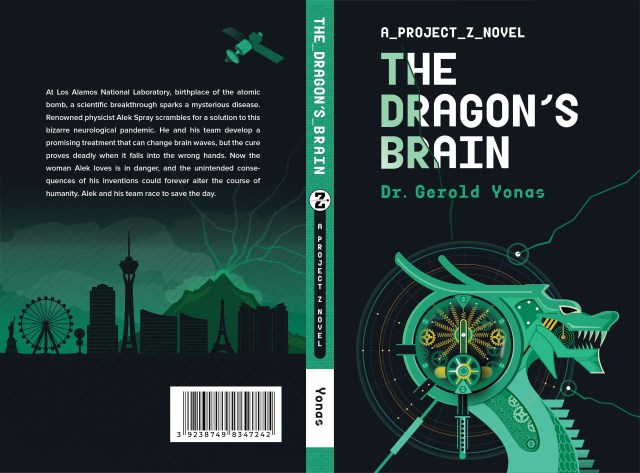
Since I have no environment to try out this concept, I have resorted to writing fiction to explore my ideas. My soon-to-be published novel, The Dragon’s Brain, delves into the idea of brainwave entrainment. The heroine of the story recovers from a coma after using what I call the Brainaid. Look for The Dragon’s Brain in bookstores this October and get in touch if you know anyone with the connections and capacity to make this revolutionary product a reality.
 SDI Guy