Multi-layer missile defense and the coronavirus

My suggested missile defense approach to defense against the coronavirus would require a layered defense involving a  futuristic breathalyzer and inhaler.

I assume the virus is mostly transmitted by droplets in coughs, but the problem of pneumonia is caused by virus in the lungs,  not the nose or throat.  So I suggest the first layer of defense would be to examine a person who tries to enter a previously sterilized facility through a secure positive pressure  revolving door. The interior of the revolving door would be sterilized to intercept any virus on the person.

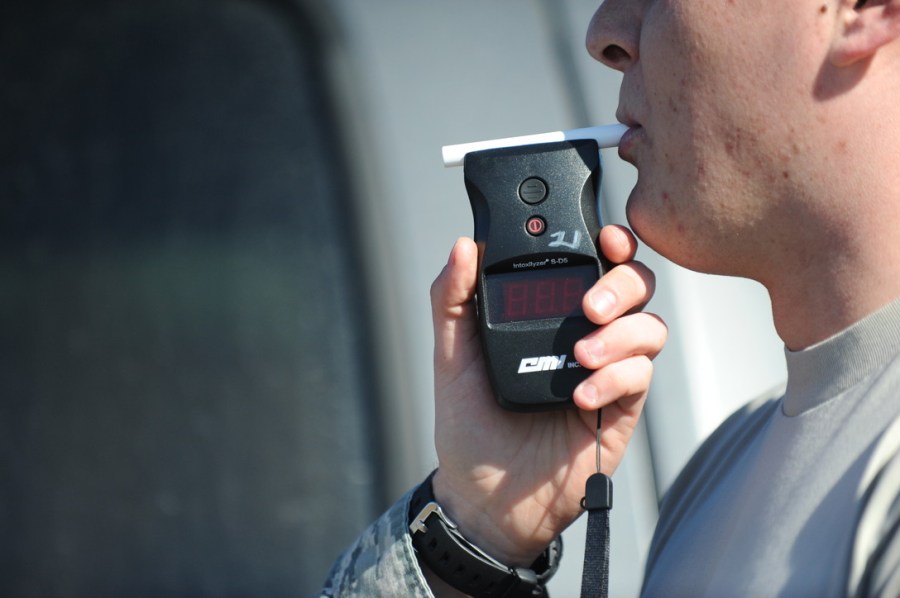
The person would first blow into a breath analyzer that would capture the air from the lungs.  After a strong exhale into the collector, a breath analyzer would detect any virus in exhaled droplets. An as-yet-to-be-developed sensor could be an instant  laser induced fluorescence and spectral analyses.  I assume the fluorescence is unique, but this needs to be determined. This is similar to the mid course discrimination problem where we require an excellent ROC curve.

This sensor could be embodied in a miniaturized virus  breathalyzer including a miniature laser and light spectrum analyzer. If the sensor is very sensitive, but not very specific, an  RNA based very specific real time sensor  might  be necessary after the first  positive reading.

If the virus is detected, the next layer would trigger the intercept of the virus. This would be an inhaler function possibly attached to the analyzer that sprays a virus killing drug into the lungs. Such drugs have  already been demonstrated in vitro and are being tested in hospitals.

If the result is a true negative, the person is allowed to enter the already certified facility. The next layer is needed if the person is detected as a true positive, and after treatment with the inhaler,  entrance is prohibited by the door.

The next layer of defense begins with a GPS labeled  signal that is sent to the defense management computer. Information giving the detection and treatment  information then permits contact  tracking and follow up of the person.
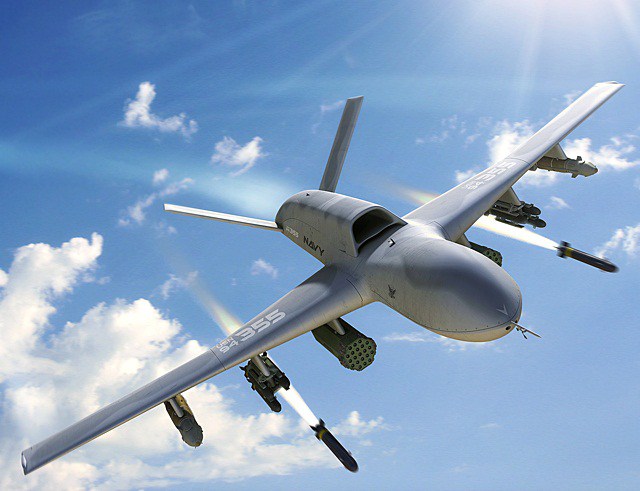
predator drone

A revolution in missile defense

In the past few months, this blog has been focused on missile defense and has been enthusiastic about remotely piloted aircraft (RPA) used for boost phase intercept (BPI).  Up until recently, my knowledge of remotely piloted aircraft has been based on reading available literature. Recently, however, I had the opportunity to visit the General Atomics Aeronautical Systems Predator factory in San Diego and “kick the tires.” The reality was totally convincing. The engineering elegance, manufacturing effectiveness and comprehensive flexibility of the systems engineering were breath taking.

These “little” aircraft are cheap to buy and operate and can go in harm’s way with extensive precision reconnaissance and surveillance connected to remote precision decision making. They also can deliver ordinance for a precision kill followed by kill assessment.  Several years ago I managed a group at Sandia Labs focused on technology components to achieve Reconnaissance, Surveillance, Target Assessment, Kill and Kill Assessment. I called this RSTAKA. In the Predator factory, I saw the entire package that I had envisioned as a military response to the proliferation of weapons of mass destruction.

In 1996, I published an article on the subject in the “Armed Forces Journal” entitled The Option of Last Resort. At the time, I did not imagine the future capabilities of remotely piloted aircraft, sensors, computers and munitions. Today these advances are deployed on the GA RPAs that may provide the capability for not only boost phase intercept but also pre-boost attack. All of the preparations for launch could become targets and offer one more layer in missile defense.

Unmanned aircraft, such as the Predator, have crossed a new horizon in their defense capabilities. After visiting the GA factory, I am even more certain that RPAs will provide the tools America needs for effective missile defense. Learn more about past, present and future revolutions in missile defense in my book “Death Rays and Delusions” available at https://www.amazon.com/Death-Delusions-Gerold-Yonas-Ph-D/dp/0692919554

Boost Phase Intercept (BPI) with high power lasers could defeat North Korean missiles

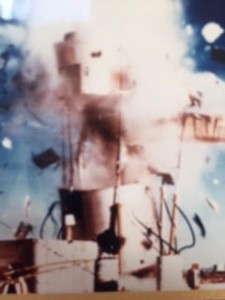
In order to achieve an effective defense against an all-out ICBM attack from the Soviet Union, the Fletcher Study, that in 1983 created the plan for the SDI, reported that Boost Phase Intercept would be needed. I explore this in great detail in my new book “Death Rays and Delusions” available now at Amazon.com. We believed the midcourse and terminal phases could overwhelm the defense with countermeasures if a large fraction of the boosters were not destroyed. Burning boosters provided a bright target that was easy to find and the thin missile skin made them relatively easy to kill. Missile vulnerability was demonstrated with a high power laser directed at a mock-up of a booster subjected to its acceleration and pressure stresses. The test was described by one of the technical skeptics as a “strapped down chicken test.”

Laser destruction of liquid fueled booster

Although the booster was very vulnerable to attack, intercepting the booster required deployment of either space based missiles or lasers. The lasers were far off in the future, and the numbers of missiles appeared to require a prohibitively large launch capability, unless the missiles were miniaturized, eventually resulting in the “Brilliant Pebbles” concept. This concept was seriously pursued for five years and then canceled when the Soviet threat disappeared in the ‘90s. Small interceptor missiles, however, did appear to provide a realistic path to BPI based on advancing missile technology.

The preferred approach in 1985, however, was the ground based laser (GBL) with only relay mirrors in space, and substantial efforts were begun to develop enormous free electron lasers to produce beams of the required power and wave length. A significant development was the invention of optics that could correct for sources of beam distortion. A remaining problem was the need for multiple high altitude locations to deal with clouds. In addition, the laser technology and physics did not cooperate, and for want of a laser, the GBL was dropped, but development of aircraft based lasers continued.

laser relay
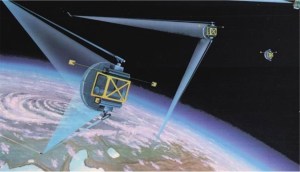
Artists concept of space based laser relay mirrors http://spie.org/newsroom/4853-did-adaptive-optics-end-the-cold-war?SSO=1

Chemical lasers on 747s enjoyed $5 billion of support for dealing with the evolving North Korean ICBM threat, but the concept was dropped by the Secretary of Defense as impractical, expensive and easily defeated. So the quest for a laser remained until recently with the development of short wave length, efficient, rugged, light weight, fiber lasers. Such lasers could be based on aircraft and be used to directly intercept boosters or relayed from space or possibly drone based mirrors to their targets. Nevertheless, this development is still many years away. So what about the near future? With the recent North Korea tests of a very high yield nuclear device and an  ICBM, the threat demands that we get very serious about deployment of an effective missile defense.

For short range defeat of boosters launched from North Korea, it is possible to utilize aircraft based very fast small missiles, and drone platforms have been proposed, as outlined in this column: http://www.sandiegouniontribune.com/military/guest-voices/sd-me-herman-northkorea-defense-20170816-story.html. So BPI, which was from the beginning of the SDI thought to be desirable or even necessary, seems to be emerging based on drone based fast missiles,  and could evolve eventually to laser weapons. To learn more, check out “Death Rays and Delusions” now available on Amazon.com.