
The Costanza Defense

Special Counsel Jack Smith recently presented an indictment of Donald Trump accusing Trump of attempting to overthrow the 2020 presidential election using techniques that Smith described as:  dishonesty, fraud, and deceit. Trump’s legal defense was immediate, namely that Trump was not lying and really believed what he was saying. This can be called “The Costanza Defense” from the comedy Seinfeld, namely “if you believe it, it is not a lie.”

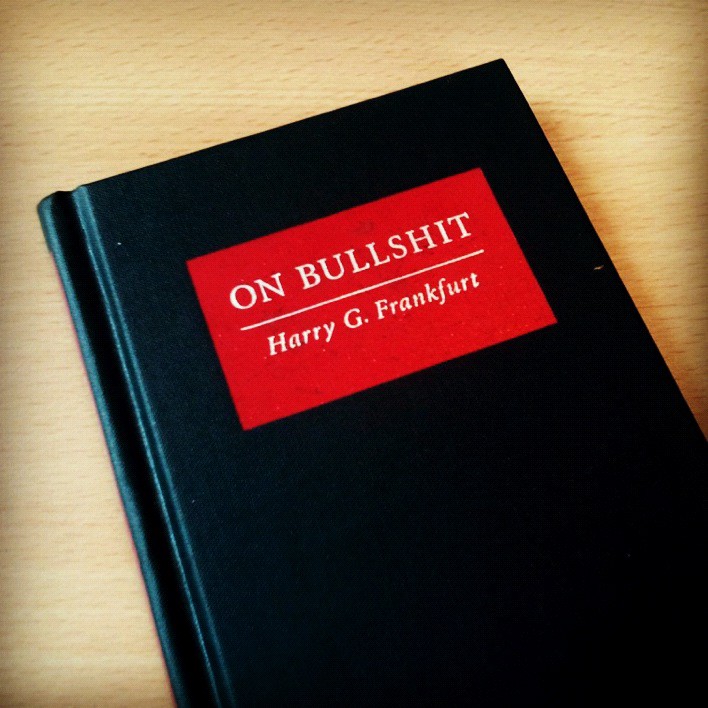
This defense is rather clever since it requires that the prosecution convince the jury that Trump was not sincere about his belief in the stories told to him by his legal team—individuals that the indictment labeled as coconspirators. So now the arguments are all about the sincerity of the defendant. The opportunity for the defense attorneys is to claim that Trump was really sincere in his claim that he was not lying, but he really believed what he was told by the very reputable attorneys that he was paying with big bucks.  And I think his defense is going to win, or at least persuade one member of the jury, if the prosecutors do not understand the difference among truth tellers, liars, and bullshit artists. I learned about this subtle distinction from the 2005 book “On Bullshit” by the Princeton philosophy professor Harry G. Frankfurt.

Frankfurt explained that both truth tellers and liars know what is true and what is false, and they really are sincere in their beliefs.  On the contrary, he explains that BS artists could care less about the truth, but only care about telling stories to win over their audiences.  Frankfurt explains that a really accomplished bullshit artist is able to tell the false story often enough, consistently enough, and forcefully enough that the audience can be totally convinced, and no argument would convince them otherwise.

The loyal followers of Trump really believe that the BS artist is sincere in the believability of his story, and they will defend the false arguments even if they contradict simple logic. I am sure a really good BS artist can convince at least one member of the jury that Trump really believes the story that he is innocent of any crime. Frankfurt explained that the capability of the accomplished BS artist “does not reject the authority of the truth ……he pays no attention to it at all,” but if he convinces the audience, namely in this case, the jury, or at least one member, that he is sincere in his BS, they won’t convict him. Frankfurt ends his book with the disturbing conclusion that “sincerity itself is bullshit.”

As it is said in TV commercials, but wait there is more……and there are lots of highly paid defense lawyers working on adding to the BS. The latest is that Trump’s claims were only aspirational and not really serious lies. One lawyer even said no reasonable person would even take such claims seriously. Maybe Trump was just kidding? So, for completeness, let’s review the
BS arguments that I am sure will be repeated often enough:

1.If you believe it, it is not a lie. 2.But what about that laptop? 3. My lawyers told me. 4. The deranged Special Council is really out to get you, not me, and I will protect you, and 5. I was only kidding.

So what I am suggesting is that the prosecution will have a very tough time convincing the jury that one of the most accomplished BS artists of all time is not sincere when he claims, “But what about somebody else, and that laptop…..I am just a gullible victim of despicable advisors, and I believed what my lying lawyers told me, so convict them,  not me, and you can believe every perfect thing I tell you…..believe me…..and I am sincere….believe me….I am not a liar…..trust me.”
Liars, Truth Tellers and Bullshit Artists

Telling false stories has become a subject of increasing media in the past couple of years. “The Washington Post” has made a full-time job of keeping track of Donald Trump’s communications and they reported that he had “accumulated 30,573 untruths during his presidency, averaging 21 erroneous claims a day.” I never tried to count the falsehoods, but I do recall that he said Obama was born in a foreign country, that Mexico would pay for the wall, and that drinking a little bleach would counter Covid. I have to admit that my previous blog posts were rather naive and simplistic about lying, and I quoted George Constanza of the “Seinfeld” TV series as the expert when he claimed,” it is not a lie if you believe it,” but I realize that is a simplistic evaluation of a very complex subject that needs more thought. 

Now the stories about lies and liars have reached such a crescendo that we hear about the “the big lie” constantly from both the left and right. The Trump believers, who are a majority of Republicans, say that people who claim Biden won the election are lying. Similarly people who voted for Biden say the Republican leadership consists of liars. Liz Cheney, however, a senior Republican member of the House of Representatives, says that the people in her own party who claim the election was stolen from Trump, are spreading The Big Lie and are “poisoning the democratic system.” The Chief of the Joint Chiefs of Staff, Mark Milley, said Trump was “preaching the gospel of the Fuhrer” and the implication is that Trump is using the big lie to convince his followers to support his claims. He also described today’s political chaos as the “Reichstag moment.” 

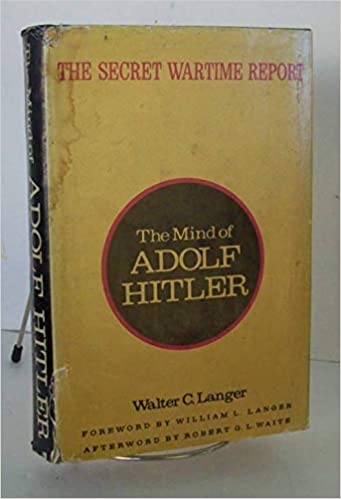
The terminology of “The Big Lie” is a historically significant application of this specific descriptive language, and has been used to describe the writings not just of Hitler, but also other evil world figures. These comments lead me to see what one might learn from the past, and I recalled an old book, “The Mind of Hitler.” This 1973 book was the first publication of an OSS secret intelligence report written by Walter Langer, an American psychiatrist in 1943. The goal of the report was to understand enough about Hitler’s psychology to predict what he would do as his empire collapsed. I reread this old book looking for hints not about the mind of a recognized evil personality, but why he had so many loyal followers.

I have no education in these subjects, but what he wrote was really disturbing. One quote from his report seemed to tell a vitally important story. “People will believe a big lie sooner than a little one, and if you repeat it frequently enough, people will sooner or later believe it.” But I wondered why there were so many followers ready to go along with the big lie. I guessed that there had to be more to the loyalty than to just the consequences of accepting and even really believing the lie, and I learned from Langer’s analysis that there was something else a lot deeper and a lot more troubling than just a charismatic leader telling a good story to a gullible population.

Langer’s analysis of the “unconscious tendencies of the German people” is worth considering, and he claims that “they had lost control of their individual mental processes.” Now that is a truly frightening possibility that, as Langer claims, “a peculiar bond that exists … beyond the control of any purely rational, logical or intellectual appeal.” While I have never studied group “mental processes,” I always wondered what brought the German people to go along with the big lie and its consequences for the world, and I found no explanation. 

But then I looked a lot deeper into the subject and found a more persuasive analysis from the writings of Harry G. Frankfurt, a well-known Princeton philosophy professor. His 2005 book “On Bullshit” provided me with a different point of view that is worth considering. He described truth tellers, liars and bullshit artists. He says that both the truth teller and the liar “responds to the facts as he understands them” but the bullshit artist does “not reject the authority of the truth as the liar does…he pays no attention to it at all.” So my initial quote from Constanza is misguided, and should have been, “It is a lie if you believe it, and it is bullshit if you don’t care about your beliefs; you just want to persuade somebody to go along with your arguments.”

Frankfurt wrote that the bullshitter makes assertions “without paying attention, to anything except what it suits one to say.” He goes on to say that bullshit is “unavoidable whenever circumstances require someone to talk without knowing what he is talking about.” Now that came across to me as a very good description of many of the talking heads that are interviewed on the so called news shows every day, and indicates to me that we need to come to grips with the bullshit that seems to be spread around. Stinking bullshit spread uniformly in a thin pervasive layer around today’s public communications is a more frightening image than fighting for truth.  

Many analysts have recently written that “bullshit is more dangerous than lies, since it erodes even the possibility of truth existing and being found.” I found this hypothesis to be the most serious challenge of modern mass communication since that there are so many communication tools available to practically everybody, as Frankfurt says “whether or not you know what you are talking about.” 

So, in my view, the job of the media is to expose the bullshit artist rather than engage in arguments and endless counter arguments about debatable facts. But how to do that is not at all clear without knowing what the communicator really believes.  Frankfurt ends his brilliant essay with a conundrum to determine if the communicator is sincere, and to determine if the communicator is being “true to his own nature,” and he concludes that “our nature… is less stable and less inherent than the natures of other things… and sincerity itself is bullshit.”