
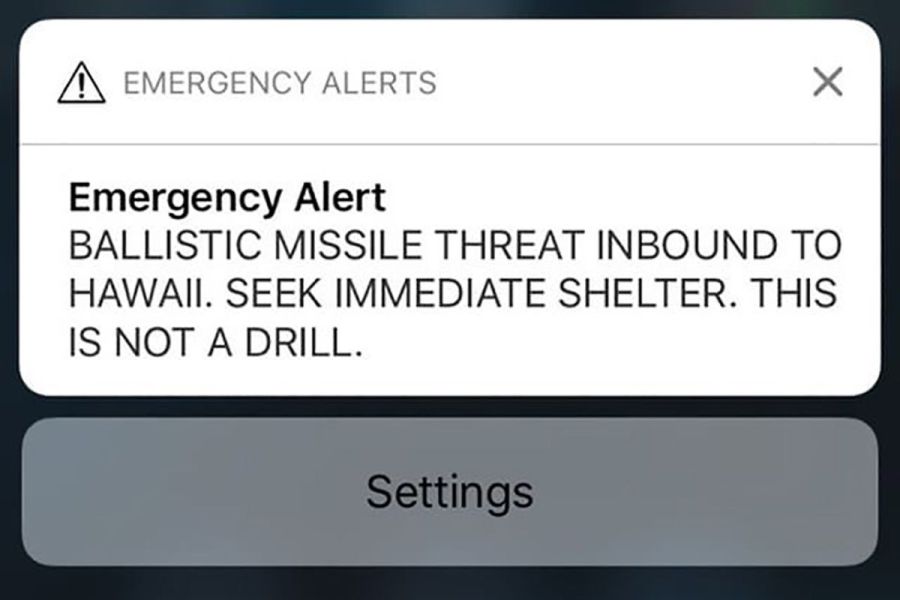
ACTIVE SHOOTER IN THE SCHOOL. DUCK AND COVER. THIS IS NOT A DRILL.
When recent horrible events caused me to envision such an announcement in a school, I was reminded of President Reagan’s call for a missile defense system that would that would eliminate the duck and cover approach and replace it with a program to “make nuclear weapons obsolete.” He asked us in the defense community to put together a plan to deploy an effective missile defense system. Although we asked for five years and $25 billion to just study the needed technologies, we were nowhere near what was needed. The key elements of the system were a space-based warning and attack tracking system, interceptor directed energy and missile weapons and computer controlled information and battle management. An effective method to protect schools would be trivial in comparison, but would still need many of the same system elements. But first, let’s consider the threat to schools.
Let’s imagine that the school had already held several active shooter drills and the students and teachers knew what to do, namely duck and cover. Unfortunately, a deranged shooter with an assault weapon with lots of ammunition could hunt his helpless prey until his ammunition or victims were no longer available. The shooter could have been shooting through doors and walls without interruption, leaving dozens of dead and dying.
Now let’s consider an early warning system at the school perimeter, entry detection and tracking sensors and a layered defense. This would begin with a comprehensive mental health system, highly restricted weapons of war, including background checks and licensing, legal preventive measures and a commitment not only to see something, say something, but also to do something. The defenses at the school would include a secure and monitored perimeter, CCTV and gunshot detectors in every room, as well as a highly trained and readily available armed response. The school would have been mapped so the sensors could inform the response system where and when to act. There might also be a debilitating piercing sound or bright flashing light system to incapacitate the shooter. None of these elements require new technology. But what about where I started with missile defense? Let’s look at how the same systematic approach could apply to the as yet unsolved problem of effective missile defense.
In 1984, when I was the Strategic Defense Initiative Chief Scientist, one of our most serious problems was the cost of space launch. I recall an image of the Manned Maneuvering Unit,  and I was acutely aware of the cost of transporting sensors and weapon hardware into space. One of our concepts was a space-based chemical laser that would weigh 100 tons. Deploying a single laser would require 10 space shuttle launches and the transportation cost would be $10 billion. This cost did not include the needed maintenance and fuel. It was hard to imagine the cost of just getting there when you could buy a cross-country air ticket for a few hundred dollars, and the cost of a modern fighter plane was a few tens of millions, so we imagined methods that might reduce the launch cost by an order of magnitude, but there has been little progress in cost reduction … until now.
Now we can realistically consider that factor of 10 cost reduction, since Elon Musk, and his private venture has claimed that the 100-ton launch could cost as little as $1 billion. The implications to missile defense for deploying heavy payloads is nothing less than remarkable. But wait there’s more. In the last 10 years, powerful electrically pumped fiber lasers have been demonstrated and widely used in commercial industry. Now high-power space-based lasers are a realistic possibility. Even a less demanding space launch and maintenance requirement would be air-based lasers and use of lightweight space relay mirrors.
The combination of low cost launch and lightweight space relay mirrors driven by air based electrical lasers makes a space based global defense system a technologically achievable goal. The outcome of such deployments might also lead to an unstable environment for space wars, and many of the issues of terrestrial war stability would have to be dealt with. The implications of space wars will need new thinking about space rules of the road, and it is not too soon to seriously consider the possibility that space will turn out to be a dangerous place. But schools might then be safe places.



 based strategy. That is until Ronald Reagan questioned the entire basis for our survival. He asked if we could develop a high-tech defense based on assured survival instead of assured destruction. His idea was totally out of favor with all of his strategic weapons advisors who believed that the threat of total mutual guaranteed annihilation would be the only way to achieve deterrence.
 As I see it, our country has at least six options and 2018 is likely to be the year we decide what road to take. The options consist of the six Ds: deterrence, defense, deals, destruction, deceit and delay. We faced a similar decision at the height of the Cold War when I was in the middle of the muddle of what to do about the Soviet Union, as I describe in my recently published book, “Death Rays and Delusions.”
 SDI Guy