
Voltaire

Are you smoking something?

One of the readers of my latest couple of blog posts asked me if I was smoking funny cigarettes. I don’t think he appreciated my satire. I really did not know I was in the satire business, until one of the readers of my book, “Death Rays and Delusions,” commented that I was trying to be another Voltaire. Being an engineer, I thought that was an automobile model, (perhaps a Chevy), so I looked it up and found Voltaire was a 16th century philosopher who poked fun at political leaders using a style characterized by wild exaggeration, irony and subtle humor. In my recent blog posts, I poked fun at the obviously silly idea of a new branch of the military, the space force. I knew enough about the subject that I figured the Air Force already had the job well in hand so I opined that one financial benefit would be the use of the surplus uniforms left over from the Star Trek TV series. My other post dealt with the concept that we could dominate space control through investing in new and revolutionary technologies.

In my book, I described the outrageous notions that we could defend ourselves against the threat of nuclear tipped ballistic missiles if we only had to deploy hundreds of giant space-based lasers, or thousands of tiny missiles, or maybe just a few orbiting nuclear weapons to create beams of x rays. When I was the chief scientist of the SDI program, I enjoyed the satirical humor in the “Bloom County “cartoons where I was described as a plump penguin who argued, “Why fer crying out loud…. research physicists need Porches too.”

Maybe the message of my book was lost in the satire, but my point was that decisions were being driven by the tech sales forces of the military industrial complex. They were extremely successful in extracting large sums for unlikely programs, that turned out to be the heart of an elaborate mind game with the Soviets.

The policy decision makers on both sides had no clue about the reality of the technology, but they were mostly motivated by their own philosophical, strategic and economic concepts. Gorbachev hated nukes, the arms race and the impending financial collapse of the Soviet empire. Reagan hated nukes, believed the Soviet Union was on the edge of financial extinction and was willing to make a deal that even shared our technology with the Soviets.

As it turns out, scientists and engineers were involved, but were only along for the ride. Many of them believed that their next miracle would give us the winning move.
Make space great again

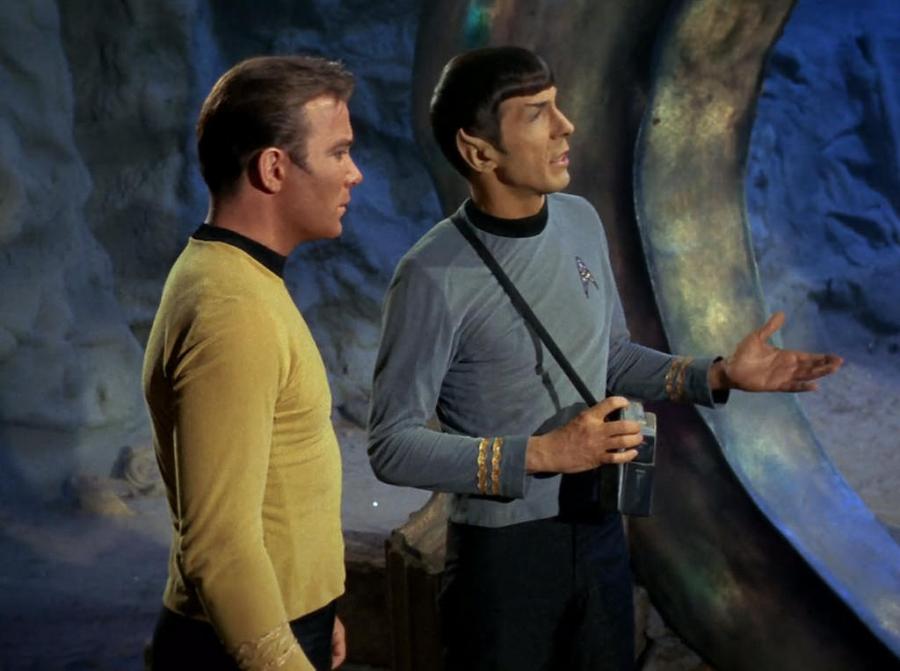
President Trump is calling for the creation of a “Space Force,” a new sixth branch of the military that will ensure “American dominance in space.” Personally, I am whole-heartedly in favor of this proposal. After all,we won’t need to buy new uniforms — we can just find the old ones left over from the Star Trek show and save a lot of money. Creating the Space Force will also bring meaningful employment to many lobbyists, contractors and Congress people who will be chasing after the new funding. It reminds me of when Harold Agnew, my former mentor and the person who initiated my SDI involvement, warned me that the proposed SDI initiative could result in many deaths because many people would be trampled in the uncontrolled stampede to get the new money.

Another source of business would be the turnover of all of offices leased near the Pentagon, and of course all of the new construction for the government labs and offices. Hotels will also be filled with the multitudes of attendees at the high cost conferences explaining the technical challenges and the funding opportunities. Furthermore, if we invite foreign participation, each country will need to host cocktail parties and special events at their embassies, Caterers, bartenders, clothing stores, drycleaners… the number of businesses that stand to profit from Space Force will be endless—talk about an economic boost.

Space Force offers opportunities for the media and information industries as well. Learned professors from Ivy League universities will attack the new military branch and appear on countless talk shows, necessitating counter arguments from proponents. The clergy will need their own air time to go along with their sermons and the arms control advocates will need their own conferences, pamphlets and books. The new Space Force will boost the economy, provide jobs for the unemployables, and will offer a viable recycling outlet for previously useless Star Trek uniforms. I believe this is the best new idea since Star Wars. May the Space Farce be with you, indeed.

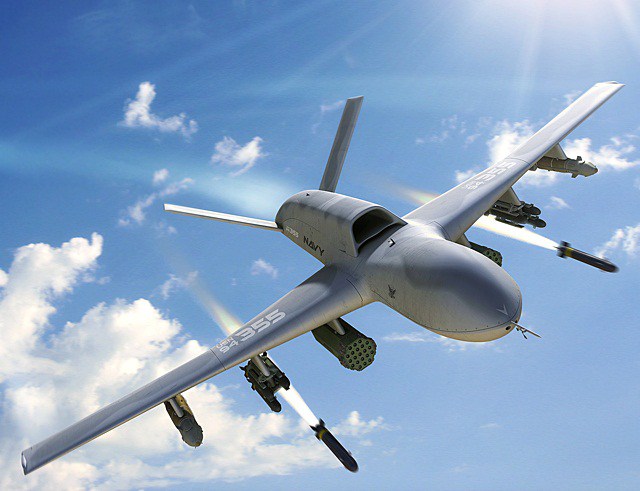
predator drone

A revolution in missile defense

In the past few months, this blog has been focused on missile defense and has been enthusiastic about remotely piloted aircraft (RPA) used for boost phase intercept (BPI).  Up until recently, my knowledge of remotely piloted aircraft has been based on reading available literature. Recently, however, I had the opportunity to visit the General Atomics Aeronautical Systems Predator factory in San Diego and “kick the tires.” The reality was totally convincing. The engineering elegance, manufacturing effectiveness and comprehensive flexibility of the systems engineering were breath taking.

These “little” aircraft are cheap to buy and operate and can go in harm’s way with extensive precision reconnaissance and surveillance connected to remote precision decision making. They also can deliver ordinance for a precision kill followed by kill assessment.  Several years ago I managed a group at Sandia Labs focused on technology components to achieve Reconnaissance, Surveillance, Target Assessment, Kill and Kill Assessment. I called this RSTAKA. In the Predator factory, I saw the entire package that I had envisioned as a military response to the proliferation of weapons of mass destruction.

In 1996, I published an article on the subject in the “Armed Forces Journal” entitled The Option of Last Resort. At the time, I did not imagine the future capabilities of remotely piloted aircraft, sensors, computers and munitions. Today these advances are deployed on the GA RPAs that may provide the capability for not only boost phase intercept but also pre-boost attack. All of the preparations for launch could become targets and offer one more layer in missile defense.

Unmanned aircraft, such as the Predator, have crossed a new horizon in their defense capabilities. After visiting the GA factory, I am even more certain that RPAs will provide the tools America needs for effective missile defense. Learn more about past, present and future revolutions in missile defense in my book “Death Rays and Delusions” available at https://www.amazon.com/Death-Delusions-Gerold-Yonas-Ph-D/dp/0692919554

duck and cover

Duck and Cover 2.0


students ducking and covering

ACTIVE SHOOTER IN THE SCHOOL. DUCK AND COVER. THIS IS NOT A DRILL.

When recent horrible events caused me to envision such an announcement in a school, I was reminded of President Reagan’s call for a missile defense system that would that would eliminate the duck and cover approach and replace it with a program to “make nuclear weapons obsolete.” He asked us in the defense community to put together a plan to deploy an effective missile defense system. Although we asked for five years and $25 billion to just study the needed technologies, we were nowhere near what was needed. The key elements of the system were a space-based warning and attack tracking system, interceptor directed energy and missile weapons and computer controlled information and battle management. An effective method to protect schools would be trivial in comparison, but would still need many of the same system elements. But first, let’s consider the threat to schools. 

Let’s imagine that the school had already held several active shooter drills and the students and teachers knew what to do, namely duck and cover. Unfortunately, a deranged shooter with an assault weapon with lots of ammunition could hunt his helpless prey until his ammunition or victims were no longer available. The shooter could have been shooting through doors and walls without interruption, leaving dozens of dead and dying. 

Now let’s consider an early warning system at the school perimeter, entry detection and tracking sensors and a layered defense. This would begin with a comprehensive mental health system, highly restricted weapons of war, including background checks and licensing, legal preventive measures and a commitment not only to see something, say something, but also to do something. The defenses at the school would include a secure and monitored perimeter, CCTV and gunshot detectors in every room, as well as a highly trained and readily available armed response. The school would have been mapped so the sensors could inform the response system where and when to act. There might also be a debilitating piercing sound or bright flashing light system to incapacitate the shooter. None of these elements require new technology. But what about where I started with missile defense? Let’s look at how the same systematic approach could apply to the as yet unsolved problem of effective missile defense.

In 1984, when I was the Strategic Defense Initiative Chief Scientist, one of our most serious problems was the cost of space launch. I recall an image of the Manned Maneuvering Unit, manned maneuvering unit and I was acutely aware of the cost of transporting sensors and weapon hardware into space. One of our concepts was a space-based chemical laser that would weigh 100 tons. Deploying a single laser would require 10 space shuttle launches and the transportation cost would be $10 billion. This cost did not include the needed maintenance and fuel. It was hard to imagine the cost of just getting there when you could buy a cross-country air ticket for a few hundred dollars, and the cost of a modern fighter plane was a few tens of millions, so we imagined methods that might reduce the launch cost by an order of magnitude, but there has been little progress in cost reduction … until now. Tesla in space

Now we can realistically consider that factor of 10 cost reduction, since Elon Musk, and his private venture has claimed that the 100-ton launch could cost as little as $1 billion. The implications to missile defense for deploying heavy payloads is nothing less than remarkable. But wait there’s more. In the last 10 years, powerful electrically pumped fiber lasers have been demonstrated and widely used in commercial industry. Now high-power space-based lasers are a realistic possibility. Even a less demanding space launch and maintenance requirement would be air-based lasers and use of lightweight space relay mirrors. 

The combination of low cost launch and lightweight space relay mirrors driven by air based electrical lasers makes a space based global defense system a technologically achievable goal. The outcome of such deployments might also lead to an unstable environment for space wars, and many of the issues of terrestrial war stability would have to be dealt with. The implications of space wars will need new thinking about space rules of the road, and it is not too soon to seriously consider the possibility that space will turn out to be a dangerous place. But schools might then be safe places.