
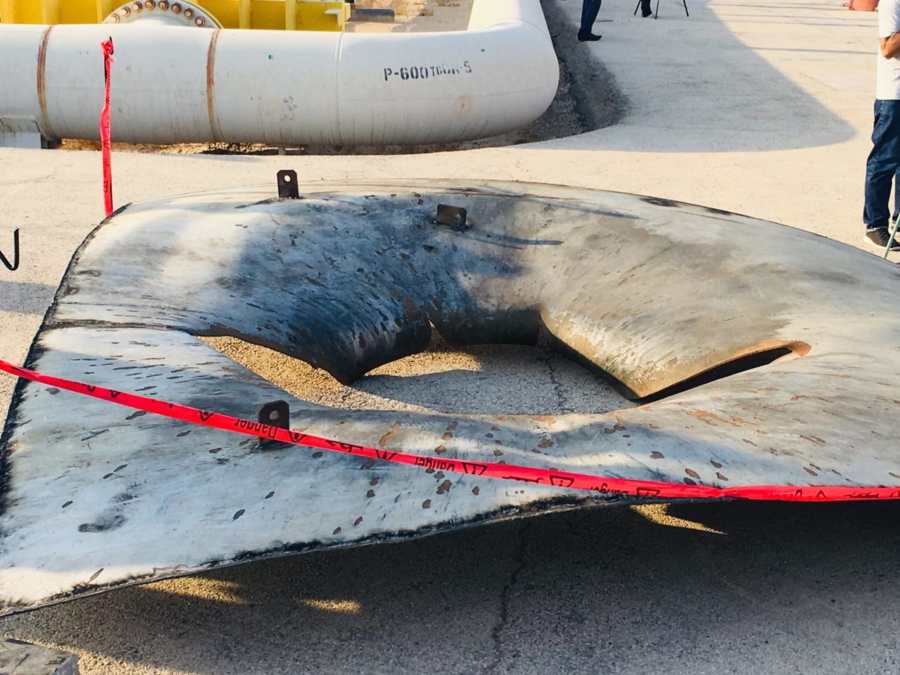
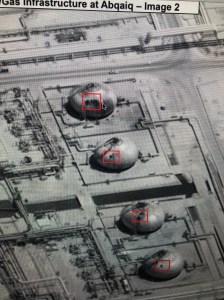
Precision drone attack damage of Saudi Oil facility
Could low cost, fairly low tech aircraft defeat the very expensive missile defense system of Saudi Arabia? Of course not! No way, I thought, since the Saudis rely on our technology and we have spent billions and billions on missile defense since we began the SDI program in 1984.
I never gave this possible threat much thought until the Saudis’ giant oil facility was attacked with high precision on Sept. 14, causing enough damage to measurably reduce the global oil supply.
Yes there was a fairly modern missile defense system in place, but the attack came from tens of small low-flying drones and cruise missiles proving that the best defense against the wrong attack is useless. It looks like I was not the only one surprised since Israel, who should have been the most alert to such threats, has just announced they are reacting to this event. (“Netanyahu seeks billions to fund Israeli defense against Iranian cruise missiles,” Haaretz, Oct. 07, 2019.) Even before that, the Russians announced in Izvestia that their small multi rotor drones “will perform not only reconnaissance missions, but also strike targets with miniature bombs.”
I recall that when the SDI was created, the secretary of state raised the issue of cruise missile defense, but his question was never seriously answered and we focused on the Soviets’ huge investment in intercontinental ballistic missiles. So this new threat is not so new, but I hope the new aspect of swarms of low-cost drones is now being taken seriously.
This wake-up call up call should now be loud and clear, but even worse than we expected, since even though the cost of cruise missiles is very high, the technology and cost of swarms of drones has become very attractive worldwide to even capable individuals. It is now realistic that many of the world’s soft targets, such as cities, are vulnerable to attack. But certainly we could use electromagnetic weapons to jam, confuse, take over or destroy the guidance and communications of drones, high power lasers to destroy their delicate components or just plain old intercept missiles and anti-aircraft guns to blow them out of the sky, so not to worry. We could even deploy our own swarms of defense drones to attack their offense swarms.
Well, it is not that simple since the real issue is the cost exchange, and the low cost and tactics available to giant swarms of drones could reduce the effectiveness of most of tomorrow’s technologically available defenses.
In addition, there is the element of surprise, demanding an early warning detection and tracking system, as well as the reality of exhaustion of the defense against fake or real repeated attacks. But we know that each low-cost drone could only deliver a pound or so to a target, so what is the big deal? Well, maybe the drones could target critical parts of our exposed electric grid, or maybe disperse biological agents along major streets, or target large sports events with hundreds of grenades or just go after parking lots at crowded shopping centers? The implication of such terror weapons are frightening to say the least.
Certainly Israel has some not so friendly neighbors, and their enemies must be preparing such killer drone swarm attacks, but we don’t have such problems from our neighbors .… unless the drones are delivered from ships near the big cities near our coasts.
So what to do about all of these new concerns about a threat that might be more likely than intercontinental missile attack that attracted our defense community for decades? I am sure the Pentagon, the labs and the defense industry are working to figure out our response. Of course, the threat will evolve as well as the defenses, and we need to also prepare for simultaneous info and space attacks, so we may look on the simplicity of the good old days with nostalgia.
 SDI Guy