
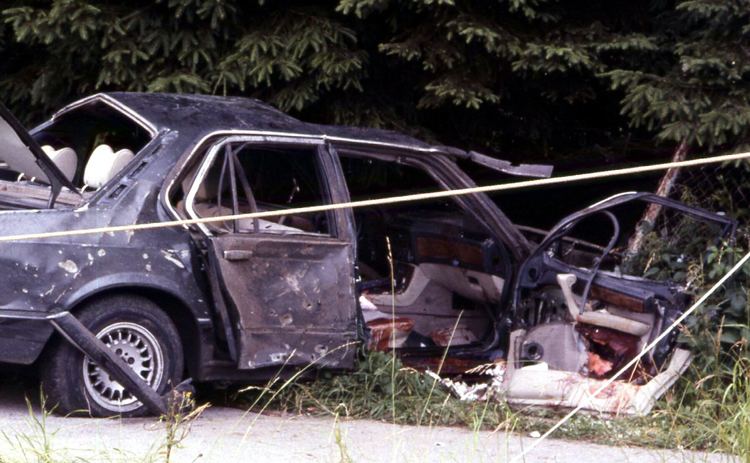
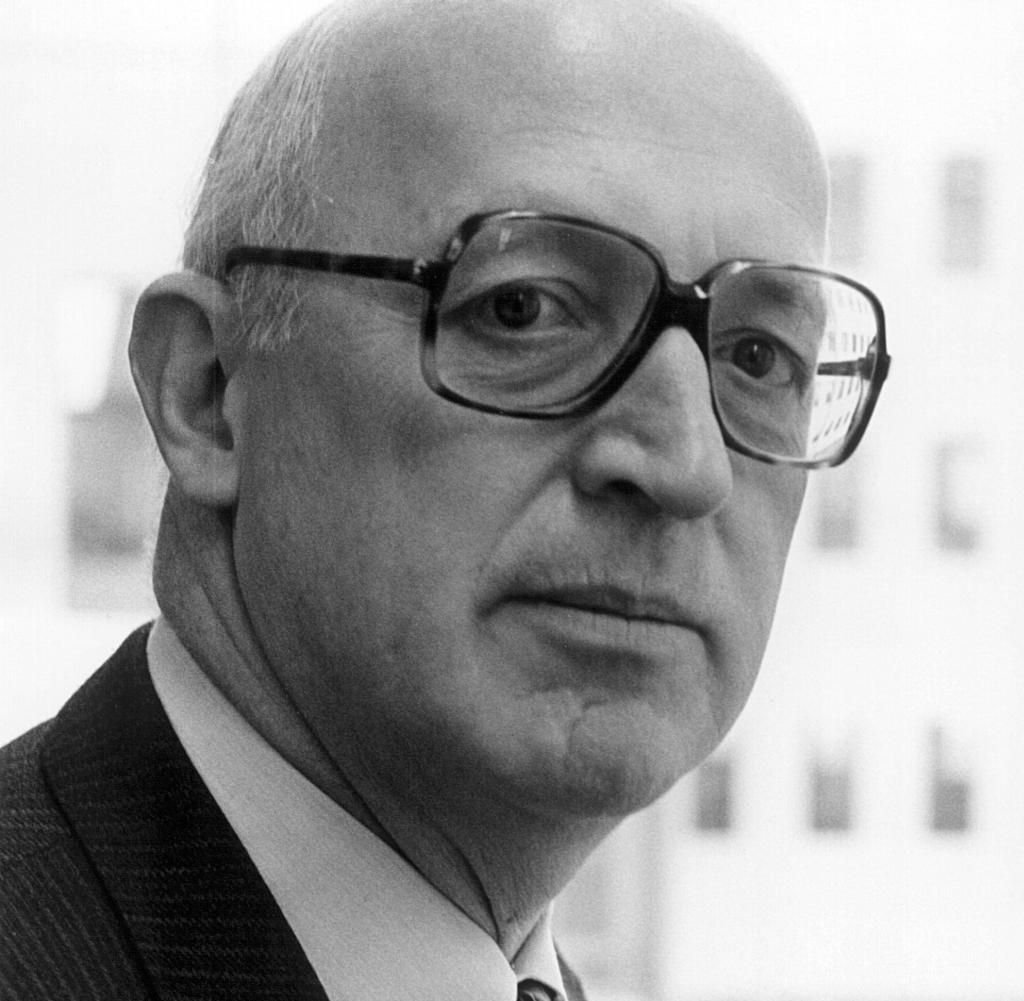
 “High-tech research director and driver slain by bomb.” Sound familiar? You probably think it just happened in Iran. Actually this happened in Bonn, and the headline was from the July 10, 1986, New York Times. You probably confused it with the very similar November 2020 New York Times headline that read, “Iran’s top nuclear scientist killed in ambush.” So, history repeats itself, but we really do not learn that much from history since we tend to forget. Let’s try to remember.
The 1986 story went on to explain that “a remote control bomb killed the research director, Karl Heinz Beckurts, of West Germany’s largest electronics company and his driver today.” The article reported that a “seven page letter found near the site of the bombing and signed by the Red Army Faction said he “had been killed because “he supported the U.S. space-based missile defense program.” This supposed setback to our program was one of many events that should be understood when trying to understand the real history of 1986 that, in my view, marked the beginning of the end of the Soviet Union.
At the same time that the KGB was trying to stop us, the Soviet Union’s military industrial complex was preparing to launch the world’s biggest booster, Energia, carrying a 100 ton demonstration test bed for components of the world’s first space based laser. This was a critical part of their plan for a battle station that would allow them to dominate space and prevent us from achieving any missile defense capability. This dramatic space experiment is in my opinion the best evidence that the Soviet military industrial complex took the strategy of competing with our SDI program seriously.
But why was Germany even involved in our SDI program? In March 1985, the president and the secretary of defense decided that we should make our program an international effort to involve and protect not just the U.S. but “everybody.” Some questioned this. Global defense against whom, the alien invaders? Vice President Bush was assigned the job of visiting each of our allied leaders and getting them to sign up to support our program. I was asked in May 1985 to go with Bush, in my role as the SDI Chief Scientist, to provide background technology advice and information. I met with him to prepare. I had dinner at his house, and even bought a new suit for the trip.
I could tell Bush, one of the most reasonable people I met in Washington, was not particularly enthusiastic about the SDI and he told me the whole allied involvement thing “would not be prudent,” but he was ready to go make deals anyway. He may have talked to Secretary of State George Shultz, who thought the whole thing was unrealistic. Nevertheless, Bush was always loyal to Reagan and he was ready to take me along. I was very excited about going for a ride with the vice president on Air Force II, and tagging along when he met with heads of state. I knew Bush wanted to make light of this whole thing, and was not that enthusiastic about my participation.
But it never happened. The next month, TWA 847 was high jacked, and the event made the cover of Time magazine. Reagan said forget about SDI for now, and told Bush to focus on terrorism instead of SDI. As a result, my big adventure was called off the week before we were about to leave. When I told my boss the bad news, he could barely hide his lack of sympathy for my disappointment.
Secretary of Defense Weinberger still wanted to get foreign programs going, if for no other reason than to help persuade Congress to increase our budget for the next year to $3.7 billion instead of their plan that was for “only” $2.7 billion. At that time we were having considerable trouble with finding worthwhile ways to spend our funding, and the lower level of funding was plenty. Nevertheless this program was the proud invention of the president, and we had to do what we could to make it real. So I was tasked by the program director, General Abrahamson, to explore arrangements with technical leaders of our allies to join us in the program at our expense.
We knew that the Soviets were really unhappy about our getting political support from others in the controversial program and they wanted to drive a wedge between us and our friends. Although there were not many foreign leaders really interested in working on our program, particularly the French president, Francois Mitterrand, who was insulted that Reagan would consider treating them as “le subcontracteurs,” and he refused to go along. Instead, Mitterrand started his own multi nation high-tech program, Eureka. There was one country that did take us seriously because they wanted their own defense against the missiles from their neighbors. That country was Israel.
The Soviets did not want the Germans to get contracts from us and help us compete with them technically and politically. More importantly, they had their own SDI program, or to be more exact, their anti SDI program. We later found out that in 1985 the Soviets had embarked on a crash program of their own to get their laser weapon in space first. This was to be the crowning achievement of their space weapon program, to” Sputnik” us again like they did in 1957. They scraped together bits and pieces from other programs and made a desperate attempt to get a high power laser into space.
Meanwhile, back at the Pentagon, our program was not moving ahead aggressively toward any sort of space deployment since we would need an enormous lift capability for our admittedly early stage development of a chemical laser that we were testing in New Mexico. There were also many beam weapon approaches being pursued including deploying a free electron laser on the ground and bouncing beams around the world from mirrors in space. Unfortunately, our shuttle was not available after the explosion in January, and the entire shuttle fleet was to be grounded for the next three years. But wait, there’s more to this story of 1986 to be told in my next blog post.

 SDI Guy