Are you kidding?

Are you kidding … nobody would believe that. You can’t be serious!

I am writing a sci/fi novel that tries to make a coherent fictional story somewhat based on the real history of death ray inventors and their inventions.  A portion of the true story is recounted in the book “Death Rays and Delusions” about my exploits as the chief scientist for Ronald Reagan’s SDI aka Star Wars program. My soon-to-be published novel, called “The Dragon’s CLAW” draws upon a real story that will cause the reader to exclaim, “Are you kidding… nobody would believe that. You can’t be serious.”

This totally true story begins with H G Wells’ 1897 “The War of the Worlds” that includes Martian invaders using infrared beams, or “the sword of heat,” that melt the metal weapons of the earth defenders. Hard to believe, but the primary space based laser weapon developed for the SDI program in the 1980s was a real sword of heat, an infrared laser called Miracle. It was going to be deployed in space and would have required miracles to ever be feasible. There is a famous picture of Ronald Reagan standing in front of a giant mock-up of the nonexistent laser weapon. But we were not alone in inventing miracles, and the Soviet Union developed their own version of a space based laser, and went far beyond a mock up. They even tried in 1986 to deploy parts of it on the world’s largest booster, Energia.

But let’s go back to the 1930s when the Serbian genius, Nikola Tesla, who probably should have, but did not receive the Nobel Prize for his electrical engineering inventions, designed a particle beam weapon that he claimed could defend the U.S. against “10000 enemy air planes at a distance of 250 miles.” It was not seriously pursued until after he died, and then after the start of WW II, the FBI seized his papers and asked MIT professor and Donald Trump’s uncle George to analyze them, but he saw nothing of value. As a footnote to this history, Donald claimed in 2020 that his uncle was a genius and “It’s in my blood. I’m smart.”

The idea of particle beam weapons, actually relativistic election beams, was resurrected in 1958 by ARPA, now called DARPA, to defend ships at sea and the entire U.S. against attacking reentry vehicles. The so called See Saw concept was to build giant electron beam accelerators that would generate beams that could bore a hole in the atmosphere and deliver a killing pulse to the attackers. The fatal flaw was that the beams whipped around like a giant high pressure fire hose, and sometimes even turned back and struck the accelerator.

The concept was dropped, but was replaced by an old Soviet idea from the 50s to use the electron beam to trap and accelerate ions to relativistic velocities. The collective forces of the electron beam would trap the ions that would reach billions of volt energies accelerated only over distances of meters. This Collective Ion Acceleration concept that we called the “CIA” would become a practical way to produce stable particle beams, and the intelligence community thought that the Soviets were up to their old tricks at an enigmatic facility at their nuclear test site in Kazakhstan.

The site was called a possible nuclear test site and its nickname was PNUTS. Satellite photos of the site became a mystery that attracted the attention of many U.S. physicists, some of whom thought it was a “CIA” facility, but most were sure that their own programs needed more funding because of what the Soviets were doing. The famous U.S. magazine “Aviation Week,” with the nickname Aviation Leak, because it often seemed to know real secrets, claimed it was a particle beam weapon facility. Indeed the head of the U.S. Air Force Intelligence organization went public in 1977 claiming the Soviets had made a breakthrough and their new weapon could neutralize our entire strategic deterrent.

The real CIA asked several accelerator physicists to stare at the somewhat blurry photos, to get help to solve the mystery, but eventually the intelligence community turned to remote viewers in a psychic phenomenon program called Stargate to visualize the goings on at this enigmatic facility. One of the viewers, who was given just the geographical coordinates, and without any help from any satellite photos, made a drawing of a giant crane that was moved on eight wheels over the facility. A friend of mine visited after the end of the Cold War, and sent me a photo of that crane.

Even though the use of PNUTS had nothing to do with beam weapons, its phony reputation allowed the Soviets to attract unknowing scientists to this god forsaken part of the world, only to be disappointed that it was only a nuclear rocket test facility. We also had such a program but canceled it because of environmental issues, but they continued for decades and just made the program invisible and a total enigma to us.

There was one very serious U.S. directed energy program and that was the development of a nuclear explosion driven X-ray laser, but we were not the first to consider such nuclear powered weapons. The Soviets claimed that a “nuclear explosion creates a stream of metallic fragments of small mass that travel at more than 10 kilometers per second, and are capable of string targets in space, including warheads, with a direct hit. One underground test showed the potential plausibility of accelerating a small mass to high speeds.”

The Soviets also claimed that we were far ahead of them in development of nuclear powered weapons, and they could catch up with us in 10 years if we were slowed by an arms control agreement, but even the early advocates of this approach became discouraged after initial experiments. One of the early strong supporters who was Reagan’s chief scientific adviser, later called the directed nuclear weapons “unadulterated lies,” but I recall Edward Teller requesting an acceleration of the test program, and claimed “the president has already promised these additional funds … and do you really want me to go back to the president and say the money is not available?”

There were other mysteries during my SDI career like the claim by the editor of the biggest Arizona newspaper that the SDI radar facility in the Pacific was really the location of the alien space craft that we were back engineering, and that I was in cahoots with the aliens based on my studies as an undergrad at Cornell University. The editor suddenly departed from the scene when it was discovered that he was a fraud and had no experience that matched his phony uniform, trophies, and medals and the story of my alleged treachery never appeared, although I have a copy.

The particle beam quest was not dead, however, and use of electrons to neutralize ion beams was supported for several years by SDI as a space weapon. That program was canceled when support for SDI energy weapons drastically declined. After the end of the Cold War, the U.S. then proposed to develop a neutral beam accelerator in a joint U.S./Russia nuclear reactor powered space NPB program for planetary geology research.  The Pentagon then decided it was really interested in starting up a new NPB space weapon program and in 2018 announced it was planning a development program leading to a test in space in 2023. Then in 2019 without a lot of notice, the Pentagon announced it was not that interested in the NPB after all because it was too far off, but lasers, the original sword of heat from 1897, was now mature enough to move forward aggressively, and real advances in solid state lasers have energized an accelerated program.

One should not discount the inventiveness of energy weapon advocates, and yet another new weapon that is being supported is based on powerful microwave generators.  Some even claim that such weapons are the cause of the “Havana Syndrome” that messes with the minds of diplomats. Now after many claims of fear of foreign attackers, the CIA says that of “2000 U.S, officials in diplomat posts worldwide” who have claimed symptoms, most are not really from foreign attackers but from some sort of a natural malady. But what about the rest? A CIA panel of “experts” concluded some “small number of the cases …a plausible explanation is a directed pulsed radio frequency energy.”

Can you believe any of this? Well, the true story goes on. Truth may be stranger than fiction, but stay tuned for the fictionalized version, coming soon.
Car accident

1986 and 2020, Part 1

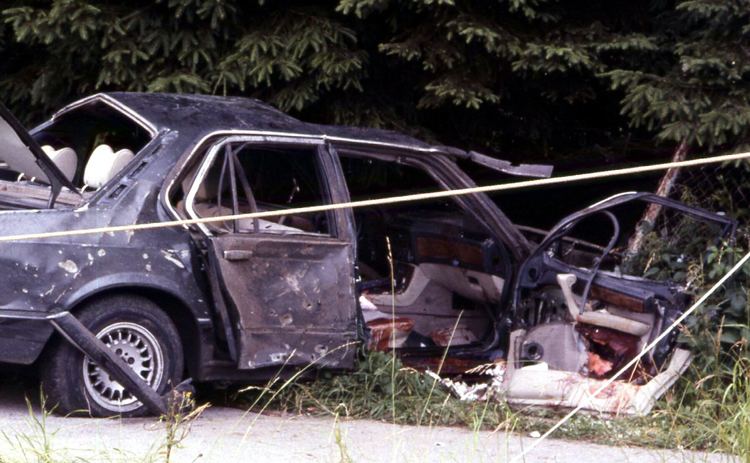
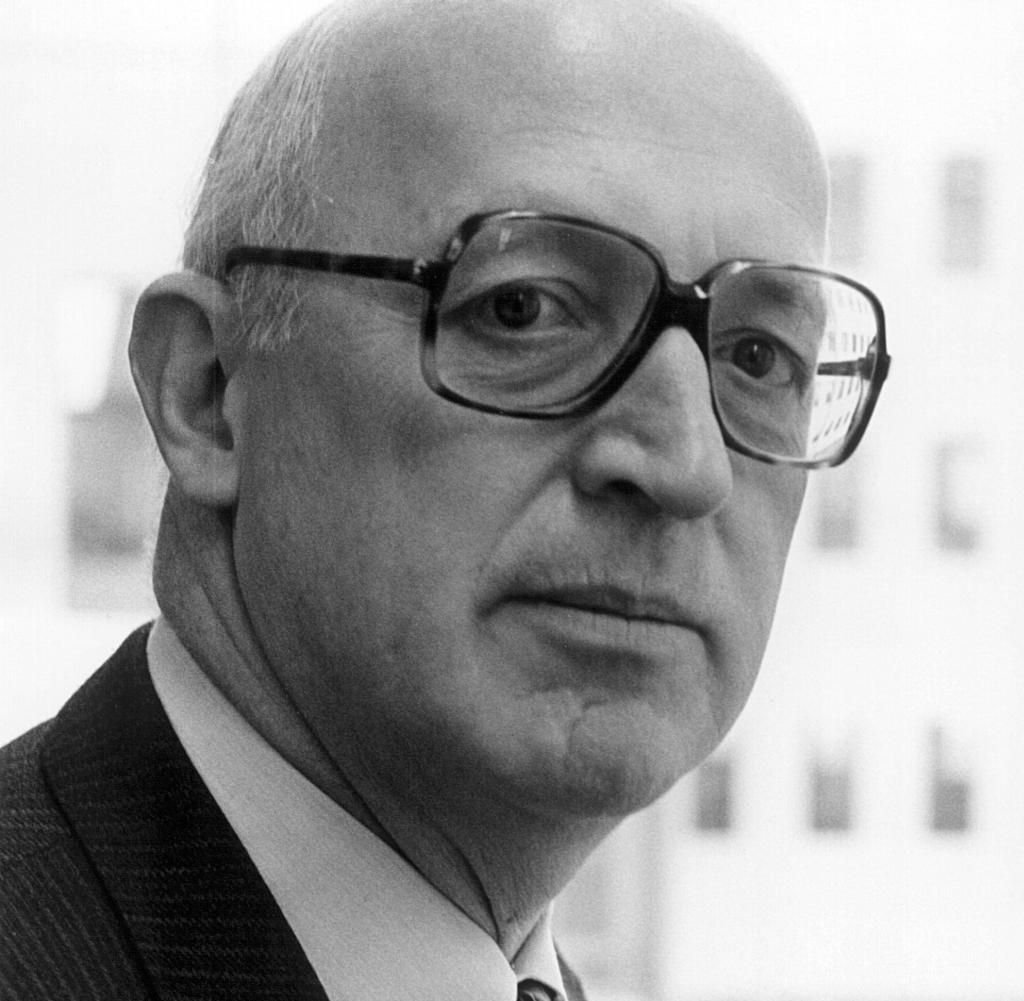
Karl Beckurts“High-tech research director and driver slain by bomb.”  Sound familiar? You probably think it just happened in Iran. Actually this happened in Bonn, and the headline was from the July 10, 1986, New York Times. You probably confused it with the very similar November 2020 New York Times headline that read, “Iran’s top nuclear scientist killed in ambush.” So, history repeats itself, but we really do not learn that much from history since we tend to forget. Let’s try to remember.


The 1986 story went on to explain that “a remote control bomb killed the research director, Karl Heinz Beckurts, of West Germany’s largest electronics company and his driver today.” The article reported that a “seven page letter found near the site of the bombing and signed by the Red Army Faction said he “had been killed because “he supported the U.S. space-based missile defense program.” This supposed setback to our program was one of many events that should be understood when trying to understand the real history of 1986 that, in my view, marked the beginning of the end of the Soviet Union.

At the same time that the KGB was trying to stop us, the Soviet Union’s military industrial complex was preparing to launch the world’s biggest booster, Energia, carrying a 100 ton demonstration test bed for components of the world’s first space based laser. This was a critical part of their plan for a battle station that would allow them to dominate space and prevent us from achieving any missile defense capability. This dramatic space experiment is in my opinion the best evidence that the Soviet military industrial complex took the strategy of competing with our SDI program seriously.

But why was Germany even involved in our SDI program? In March 1985, the president and the secretary of defense decided that we should make our program an international effort to involve and protect not just the U.S. but “everybody.” Some questioned this. Global defense against whom, the alien invaders? Vice President Bush was assigned the job of visiting each of our allied leaders and getting them to sign up to support our program. I was asked in May 1985 to go with Bush, in my role as the SDI Chief Scientist, to provide background technology advice and information. I met with him to prepare. I had dinner at his house, and even bought a new suit for the trip.

I could tell Bush, one of the most reasonable people I met in Washington, was not particularly enthusiastic about the SDI and he told me the whole allied involvement thing “would not be prudent,” but he was ready to go make deals anyway. He may have talked to Secretary of State George Shultz, who thought the whole thing was unrealistic. Nevertheless, Bush was always loyal to Reagan and he was ready to take me along. I was very excited about going for a ride with the vice president on Air Force II, and tagging along when he met with heads of state. I knew Bush wanted to make light of this whole thing, and was not that enthusiastic about my participation.

But it never happened. The next month, TWA 847 was high jacked, and the event made the cover of Time magazine. Reagan said forget about SDI for now, and told Bush to focus on terrorism instead of SDI. As a result, my big adventure was called off the week before we were about to leave. When I told my boss the bad news, he could barely hide his lack of sympathy for my disappointment. 

Secretary of Defense Weinberger still wanted to get foreign programs going, if for no other reason than to help persuade Congress to increase our budget for the next year to $3.7 billion instead of their plan that was for “only” $2.7 billion. At that time we were having considerable trouble with finding worthwhile ways to spend our funding, and the lower level of funding was plenty. Nevertheless this program was the proud invention of the president, and we had to do what we could to make it real. So I was tasked by the program director, General Abrahamson, to explore arrangements with technical leaders of our allies to join us in the program at our expense.

We knew that the Soviets were really unhappy about our getting political support from others in the controversial program and they wanted to drive a wedge between us and our friends. Although there were not many foreign leaders really interested in working on our program, particularly the French president, Francois Mitterrand, who was insulted that Reagan would consider treating them as “le subcontracteurs,” and he refused to go along. Instead, Mitterrand started his own multi nation high-tech program, Eureka. There was one country that did take us seriously because they wanted their own defense against the missiles from their neighbors. That country was Israel.

The Soviets did not want the Germans to get contracts from us and help us compete with them technically and politically. More importantly, they had their own SDI program, or to be more exact, their anti SDI program. We later found out that in 1985 the Soviets had embarked on a crash program of their own to get their laser weapon in space first. This was to be the crowning achievement of their space weapon program, to” Sputnik” us again like they did in 1957. They scraped together bits and pieces from other programs and made a desperate attempt to get a high power laser into space.

Meanwhile, back at the Pentagon, our program was not moving ahead aggressively toward any sort of space deployment since we would need an enormous lift capability for our admittedly early stage development of a chemical laser that we were testing in New Mexico. There were also many beam weapon approaches being pursued including deploying a free electron laser on the ground and bouncing beams around the world from mirrors in space. Unfortunately, our shuttle was not available after the explosion in January, and the entire shuttle fleet was to be grounded for the next three years. But wait, there’s more to this story of 1986 to be told in my next blog post.

past, present future signs

Introducing the COVID Defense Initiative (CDI)

Gerry Yonas introduces COVID Defense Initiative
Illustration by Jenna Gibson

On March 23, 1983, President Ronald Reagan gave a televised address on national security that surprised everyone as he challenged “the scientific community who gave us nuclear weapons to turn their great talents now to the cause of mankind and world peace to give us the means of rendering these nuclear weapons impotent and obsolete.” His brief words led to the creation of the Strategic Defense Initiative (SDI) and initiated my involvement in a giant program that, although it did not lead to an effective missile defense, did effectively flummox the Soviet Union.

Now we face a global health, economic, political and social threat that could possibly be as risky for all of us as the strategic missile threat we faced in the 1980s. I think we need to approach this real threat from a systems engineering approach, starting with a presidential call for action not just to the bioscience community, but also to the nation’s engineering community.

What I am suggesting is a multilayer defense involving detection and response similar to the concepts we created in the 1983 Fletcher Study. I described this study in my book “Death Rays and Delusions” and the basic approach was an information-based layered system of systems. The needed technology did not exist at that time and is still not available, so the notion of applying this methodology to a very dangerous, contagious and asymptomatic virus may seem a bit unrealistic The biggest deficiencies at that time were the need for space deployed high sensitivity and high specificity sensors, directed energy and kinetic interceptors and the command and control for the entire system.

I may be overly optimistic, but I am suggesting that the COVID Defense Initiative can provide an extremely useful approach. The virus defense technology needed for this system is no more available today than the technology we needed 35 years ago for the SDI, but now is the time for the national commitment and investment to make it real.

I envision a future system beginning with a readily available real time virus detection system. The  reliable sensors would be coupled through the Centers for Disease Control and Prevention National Syndromic Surveillance Program to other symptomatic measurements and would provide the means to identify the threat and track it using millions of other simultaneous data sources.

Facility design would be required to prevent the infected person from entering an otherwise virus free location. A next step would be an immediate antiviral treatment  that might be provided using an inhaler. If the detection, reporting and treatment are included in a widely available system of systems, we could achieve a highly effective defense system that could be coupled with a vaccine to reduce the probability of infection. This multilayer approach would reduce the probability of spreading of the disease. As in our multilayer SDI system concept, there would still be a threat, but the probability of infection would become acceptably small .

Multi-layer missile defense and the coronavirus

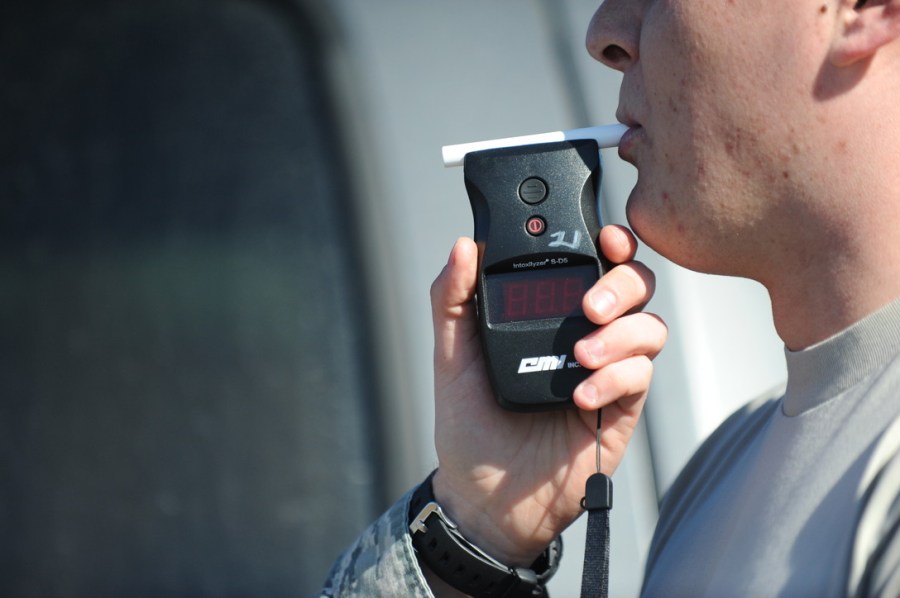
My suggested missile defense approach to defense against the coronavirus would require a layered defense involving a  futuristic breathalyzer and inhaler.

I assume the virus is mostly transmitted by droplets in coughs, but the problem of pneumonia is caused by virus in the lungs,  not the nose or throat.  So I suggest the first layer of defense would be to examine a person who tries to enter a previously sterilized facility through a secure positive pressure  revolving door. The interior of the revolving door would be sterilized to intercept any virus on the person.

The person would first blow into a breath analyzer that would capture the air from the lungs.  After a strong exhale into the collector, a breath analyzer would detect any virus in exhaled droplets. An as-yet-to-be-developed sensor could be an instant  laser induced fluorescence and spectral analyses.  I assume the fluorescence is unique, but this needs to be determined. This is similar to the mid course discrimination problem where we require an excellent ROC curve.

This sensor could be embodied in a miniaturized virus  breathalyzer including a miniature laser and light spectrum analyzer. If the sensor is very sensitive, but not very specific, an  RNA based very specific real time sensor  might  be necessary after the first  positive reading.

If the virus is detected, the next layer would trigger the intercept of the virus. This would be an inhaler function possibly attached to the analyzer that sprays a virus killing drug into the lungs. Such drugs have  already been demonstrated in vitro and are being tested in hospitals.

If the result is a true negative, the person is allowed to enter the already certified facility. The next layer is needed if the person is detected as a true positive, and after treatment with the inhaler,  entrance is prohibited by the door.

The next layer of defense begins with a GPS labeled  signal that is sent to the defense management computer. Information giving the detection and treatment  information then permits contact  tracking and follow up of the person.