
Voltaire

Are you smoking something?

One of the readers of my latest couple of blog posts asked me if I was smoking funny cigarettes. I don’t think he appreciated my satire. I really did not know I was in the satire business, until one of the readers of my book, “Death Rays and Delusions,” commented that I was trying to be another Voltaire. Being an engineer, I thought that was an automobile model, (perhaps a Chevy), so I looked it up and found Voltaire was a 16th century philosopher who poked fun at political leaders using a style characterized by wild exaggeration, irony and subtle humor. In my recent blog posts, I poked fun at the obviously silly idea of a new branch of the military, the space force. I knew enough about the subject that I figured the Air Force already had the job well in hand so I opined that one financial benefit would be the use of the surplus uniforms left over from the Star Trek TV series. My other post dealt with the concept that we could dominate space control through investing in new and revolutionary technologies.

In my book, I described the outrageous notions that we could defend ourselves against the threat of nuclear tipped ballistic missiles if we only had to deploy hundreds of giant space-based lasers, or thousands of tiny missiles, or maybe just a few orbiting nuclear weapons to create beams of x rays. When I was the chief scientist of the SDI program, I enjoyed the satirical humor in the “Bloom County “cartoons where I was described as a plump penguin who argued, “Why fer crying out loud…. research physicists need Porches too.”

Maybe the message of my book was lost in the satire, but my point was that decisions were being driven by the tech sales forces of the military industrial complex. They were extremely successful in extracting large sums for unlikely programs, that turned out to be the heart of an elaborate mind game with the Soviets.

The policy decision makers on both sides had no clue about the reality of the technology, but they were mostly motivated by their own philosophical, strategic and economic concepts. Gorbachev hated nukes, the arms race and the impending financial collapse of the Soviet empire. Reagan hated nukes, believed the Soviet Union was on the edge of financial extinction and was willing to make a deal that even shared our technology with the Soviets.

As it turns out, scientists and engineers were involved, but were only along for the ride. Many of them believed that their next miracle would give us the winning move.

Remembering the legacy of George H.W. Bush

“It would not be prudent at this juncture.”

On “Saturday Night Live,” comedian Dana Carvey, impersonated President George Herbert Walker Bush with the memorable line, “it would not be prudent at this juncture.” It was not only humorous, but an accurate description of the thoughtful approach, as well as the personality and character of the man who I had interacted with when I was the Chief Scientist of the SDI.

Reflecting on the man after his recent death, I recall the way he acted with prudence after the implosion of the Soviet Union. On Sept. 28, 1991, Bush announced his strategic nuclear weapons plans. He wanted to curtail further deployment of all nuclear tipped nuclear weapons. He wanted to limit all of our ICBMs to single warheads in order to avoid any perceived benefit from a first strike and to negotiate a posture of convincing deterrence. Part of this strategy was that there not be any sort of global missile defense as proposed by Ronald Reagan. He did recognize the growing proliferation of short-range ballistic missiles, and he called for developing and deploying limited defenses that would still be effective against the growing threat from rogue states.

His approach in 1991 was to maintain deterrence based on threat of mutual assured destruction while assuring the Russians that we had no intention of defending ourselves against their ability to retaliate. He had not changed his point of view from that when I met with him six years earlier. He had been asked by President Reagan to visit our allies and negotiate agreements with them to join us in a giant R&D program. Secretary of Defense Caspar Weinberger offered the allies prospects of lucrative contracts and technology sharing if they would sign on to supporting our SDI program.

I was asked to go along on the trip and provide low key technical back up to the negotiations. Bush invited me to visit him in his office and give him a one-on-one briefing on the program. He was cordial, informal and a good listener, but he obviously was not interested in details. We sat in overstuffed leather chairs next to a coffee table that had a signed picture of his previous vice-presidential opponent Gerry Ferraro. I noticed his plaid watch band that struck me as what would be expected of a prep school high school student and we chatted back and forth as if we were old friends.

After we talked, he asked me to come on over for dinner and continue the discussion with some of his friends. The old friends were all distinguished members of the political strategic weapons community and after dinner we went around the table and shared thoughts with the vice president.  All of the comments about SDI ranged from mild disagreement to outright opposition.

Harold Brown, former secretary of defense under Jimmy Carter, said “SDI is not a very good idea…it is a mistaken commitment to a real gamble.” Other comments basically argued that this program would mess up our relations with the allies that Bush would face on the trip. After listening to all of the opinions without comment, he closed the discussion by saying, ‘This is a listening trip…. not an SDI trip…this is a prudent step.”

I still thought the trip was on and even bought a new suit for the trip, rather than the threadbare one I had worn to dinner, but I soon learned that Reagan had decided to focus the trip on counter terrorism, not SDI, and my services were no longer needed. I should have realized that Bush believed that the trip was “not prudent at this juncture.”

With his calm, careful and thoughtful approach, Bush never sought nor received much attention in the Reagan administration, so it was not obvious at that the time that he was destined for greatness. When he was elected as President, he provided honest and clear-thinking leadership that served our nation well. He will be recognized as one of our greatest Presidents and we sure could benefit from a George Herbert Walker Bush in the White House today.

predator drone

A revolution in missile defense

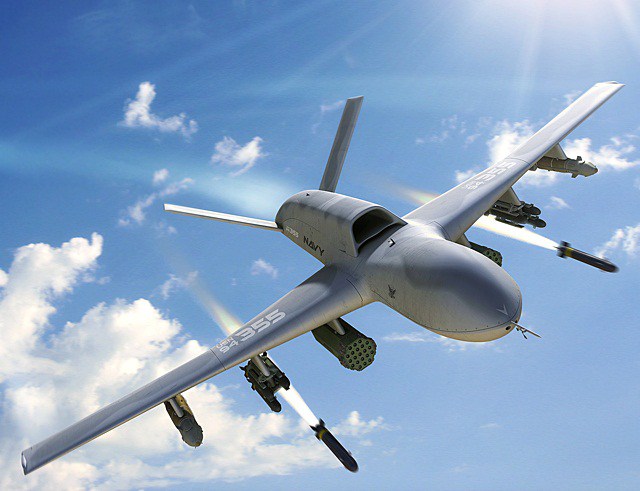
In the past few months, this blog has been focused on missile defense and has been enthusiastic about remotely piloted aircraft (RPA) used for boost phase intercept (BPI).  Up until recently, my knowledge of remotely piloted aircraft has been based on reading available literature. Recently, however, I had the opportunity to visit the General Atomics Aeronautical Systems Predator factory in San Diego and “kick the tires.” The reality was totally convincing. The engineering elegance, manufacturing effectiveness and comprehensive flexibility of the systems engineering were breath taking.

These “little” aircraft are cheap to buy and operate and can go in harm’s way with extensive precision reconnaissance and surveillance connected to remote precision decision making. They also can deliver ordinance for a precision kill followed by kill assessment.  Several years ago I managed a group at Sandia Labs focused on technology components to achieve Reconnaissance, Surveillance, Target Assessment, Kill and Kill Assessment. I called this RSTAKA. In the Predator factory, I saw the entire package that I had envisioned as a military response to the proliferation of weapons of mass destruction.

In 1996, I published an article on the subject in the “Armed Forces Journal” entitled The Option of Last Resort. At the time, I did not imagine the future capabilities of remotely piloted aircraft, sensors, computers and munitions. Today these advances are deployed on the GA RPAs that may provide the capability for not only boost phase intercept but also pre-boost attack. All of the preparations for launch could become targets and offer one more layer in missile defense.

Unmanned aircraft, such as the Predator, have crossed a new horizon in their defense capabilities. After visiting the GA factory, I am even more certain that RPAs will provide the tools America needs for effective missile defense. Learn more about past, present and future revolutions in missile defense in my book “Death Rays and Delusions” available at https://www.amazon.com/Death-Delusions-Gerold-Yonas-Ph-D/dp/0692919554

Hawaii missile mistake alert

What if the missile attacks were real?

In January, an early-morning emergency alert mistakenly warned people in Hawaii of an incoming ballistic missile attack. Less than an hour later the warning was revoked, but the mistake started a panic. More importantly, what if the missile attack were real?

Several commentators have dealt with the question of what if the missile attack on Hawaii had been real. Our military would have known almost immediately that a real missile was launched and on its way. The flight time from North Korea would have been 18 minutes and in that time we could activate our responses and send our interceptors on their way. But does that mean that the probability of stopping the attack was so high that there was no reason for fear? One commentator, without even mentioning defense, suggested that people should duck and cover. That was the “method” for surviving nuclear attack that we practiced when I was in junior high school. kids ducking under desks

Others in the military have written that our missile defenses would be activated and interceptors would be launched and could destroy a single attacking missile.  This assumes that our deployments are effective, the right decisions could be made in time, and that the response would be to launch enough interceptors to increase the probability of successful defense. But what if the first missile was really only one more test and the missile landed harmlessly in the ocean? Or maybe this was part of a strategy of seeing how fast and how well we could respond? And what if the intercept really was successful? Would we then retaliate or just send a warning?

But such issues have always been on the table during the decades of deterrence-Reagan on Time Magazinebased strategy. That is until Ronald Reagan questioned the entire basis for our survival. He asked if we could develop a high-tech defense based on assured survival instead of assured destruction. His idea was totally out of favor with all of his strategic weapons advisors who believed that the threat of total mutual guaranteed annihilation would be the only way to achieve deterrence.

Now all of that seems to be no longer acceptable and nuclear weapons proliferation is a growth industry. Our new nuclear posture review is calling for more modern low-yield nuclear weapons to strengthen deterrence since Russia and China have adopted this approach. The argument against assured destruction is that deterrence is no longer credible if the other side has developed more usable low-yield nukes and is increasingly relying on them for deterrence. So the argument is that by making our ability to wage nuclear war more credible, our deterrence is more credible. No more talk of irrevocable destruction of society.

But what about Reagan’s 1983 concept of reducing the nuclear stockpiles and creating more credible defense? As I explain in my book “Death Rays and Delusions,” the needed technology was way off in the future and we were not ready to move in this revolutionary direction. But now 35 years later we have made dramatic progress in sensors, platforms and interceptor missiles so effective defense should be taken more seriously than crawling under desks.