

The Soviet military fascination with death ray weapons dates back to the 1920s with the publication of the science fiction novel, “Garin’s Death Ray.” The Alexi Tolstoi 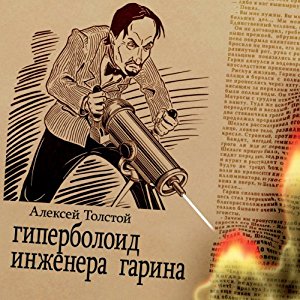 story about the genius inventor Garin described a weapon with pinpoint, but still incredibly destructive, capability. This prophetic novel not only predated by decades the invention of the laser, but it also quoted Garin’s detractors as claiming, “This invention smells of higher politics.”
Two of the three Nobel Prize winners in 1961 for the invention of the laser were Russians and they were instrumental in launching an enormous laser weapon program. Eventually the program struggled with many failures and was only revived in response to Reagan’s Star Wars program in 1984. This effort became a crash program to launch the Soviet Union’s laser Death Star.
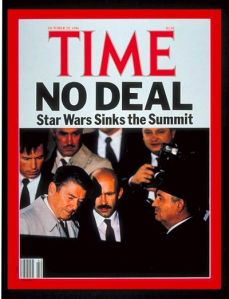
On May 15, 1985, the Soviet Union for the first time tested the world’s biggest space  launch vehicle Energia. The payload for the launch was the 80 ton Polyus experiment dedicated to the development of a space control laser weapon. Polyus was a giant risk that was characteristic of the Soviet experimental technology philosophy of try it, learn from failures, fix it and try again. The huge gamble had been in the works as a multiyear high power laser program that was already underway but became a crash program in response to Reagan’s SDI initiative. Instead of trying to compete with their own space-based missile defense program, they decided that laser-based space control would be the most logical path to defeat the SDI. Gorbachev knew that even a minimally successful deployment and test would lead to a space weapon race with the United States. He knew that his failing economy and inferior computer and electronics technology would certainly just accelerate the Soviet path to failure. Fortunately Polyus failed to orbit because of a software problem, and a real star war was avoided.



 For decades, the Soviet military lagged behind us technologically, and by dominating one half of the budget it fatally weakened their economy. The military was stuck in the quagmire of Afghanistan yet they remained committed to compete with us and maintain their control of Soviet society. A key element of their approach was stealing our secrets. We had discovered how they were shop lifting our technology, and we cooperated by “enhancing” the ingredients of their shopping bag. The chief Soviet thief was actually working for us, and he wanted to get even with his KGB bosses.
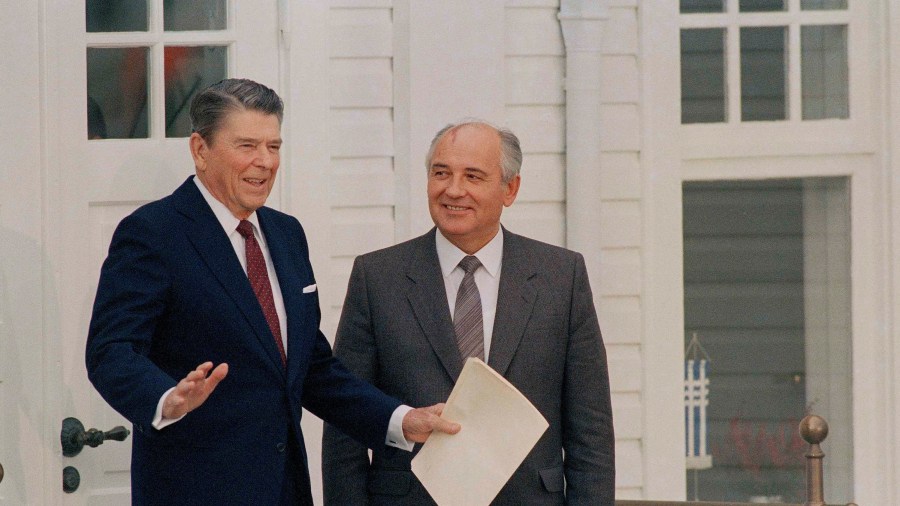

 cooperation and a conviction to abolish nuclear weapons. He wanted to move ahead with SDI that he thought was close to deployment, and share SDI with the Soviets. Secretary of State George Schultz, his principal adviser, had recommended that “we trade the sleeves of our vest and make them think they got an overcoat.”
 SDI Guy