Can Trump’s Golden Dome Make us Safe?

Last year Donald Trump announced that “we must be able to defend our homeland, our allies, and our military assets around the world from the threat of hypersonic missiles, no matter where they are launched from.” After his election, he called for a program labeled the Golden Dome, and he requested a plan with no limit on cost to achieve his goal. This brought back many memories from 40 years ago.

Although I had been involved and frustrated for many years with the rather slowly advancing R&D related to space-based missile defense, I became intrigued by new ideas after I had a lunch conversation with the brilliant and creative physicist Freeman Dyson. I had become convinced that the tactics and technology needed to counter a massive missile attack would always fail. I was sure that the offense would always have the advantage.  Dyson introduced to me a more interesting way of looking at this complex issue.  Dyson told me about his concept of a quest that would “allow us to protect our national interests without committing us to threaten the wholesale massacre of innocent people.” He argued on moral grounds for “a defensive world as our long-range objective … and the objective will sooner or later be found, whether the means are treaties and doctrines or radars and lasers.”

This quest became my full-time occupation after the March 23, 1983 speech by President Reagan in which he called for a program “to make nuclear weapons impotent and obsolete.” As a result, I was asked by Harold Agnew, the former head of Los Alamos Lab, to help put together a plan to implement the President’s challenge. The plan that was delivered to the President in September 1983 consisted of a collection of poorly defined technologies and called for a five-year $25 billion investment to answer the question of whether could someday be a defense. Because I had helped to create the plan, I was asked in 1984 to become the chief scientist for Reagan’s Strategic Defense Initiative.  I found my assignment was primarily public relations as the actual research work was dominated by the question “will it make us safe,” and I spent many days and weeks trying to explain to the detractors what “it” was.

During this time, I often found myself in debates with notable opponents. I vividly remember my   debate with Hans Bethe, Nobel Laureate in physics, who also happened to have been my quantum mechanics professor in 1961 at Cornell University. Our debate was published in Science Digest in an article, entitled “Can Star Wars make us safe?” Bethe answered no, and he was joined in his opinion by practically all of the academic scientists at the time. They argued that we had no plausible way to accomplish what they thought was Reagan’s goal to protect all of us from the threat of nuclear tipped ballistic missiles. I argued that the answer was yes, but I changed the definition of the goal to become more in keeping with my understanding of what Reagan really wanted, and in keeping with the wisdom of Dyson. Today, the demands for the protection against the threat are much more complex including hypersonic missiles, cruise missiles, anti-satellite weapons, and cyber-attacks. In fact, one of the scariest threats would be contagious bio weapons spread by swarms of crop sprayers launched from submarines near our coasts. But my answer to the question, will “it” make us safe, is still in the affirmative. 

As before, the arms control experts have spoken out to explain “it” just cannot be done. They repeat the same old arguments that it won’t work, it is too expensive, and it will create entirely new strategic instabilities. The question I asked at the time was “what is it,” and I think that is the right question to be considered now.

So, what about now?  Are we still arguing about “it” without understanding what it is? In my view, it is not about how to win the ultimate global war using space-based weapons, but it is to prevent war. Maybe with the recent advances in technology, we can find new ways to accomplish that through a new approach to deterrence that involves a shared approach to a stable combination of defense and offense tech development. We will need to first accomplish a breakthrough in vastly improved trusted communication and decision making in the face of confusion, chaos, threats, and fundamental disagreements. With the proliferation of advanced offensive weapon technology, we need to try to find a new more hopeful path.  Maybe there could be some stable system to prevent war through technology enhanced information sharing, reduced offensive threats, and deterrence that will prevent the initial steps toward war.

But I recall Bethe’s final argument in our debate was that any defense could not be trusted since it could not be tested under realistic conditions.  I argued that we already have learned to live with deterrence that cannot be realistically tested, since that has to be a question of psychology involving human decision making.   It is conceivable that complex reasoning-based information management and decision making can be assisted through AI that could carry out simulated tests of a semi-infinite number of complex combinations of events and human decision making.

I remember when I was asked by Harold Agnew to lead the group to deliver a plan for the beam weapons component of the SDI. He said in a hushed tone that I had to take very seriously his warning that my job would be “very, very dangerous.” He said I could easily be trampled by the stampede of contractors going after funding. He was not encouraging to say the least, and in a matter of weeks he walked away from involvement. He never understood the Reagan goal of the program and was definitely opposed to any thought of nuclear weapons abolition. His concept of safety was the threat of destruction.

The “it” is still hard to define and has not become easier, but President Trump says there should be a way to protect us, and there should not be any limit to the amount of investment.  Maybe the “it” is a safe future world, and then the question is… can the Golden Dome make us safe? Let’s see what “it” is in the plan soon to be delivered to the President.
The Costanza Defense

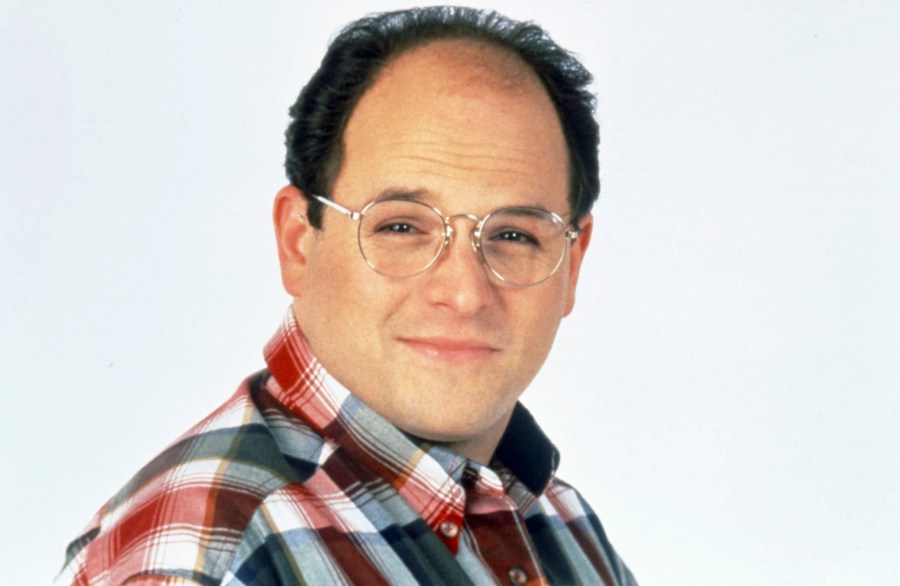
Special Counsel Jack Smith recently presented an indictment of Donald Trump accusing Trump of attempting to overthrow the 2020 presidential election using techniques that Smith described as:  dishonesty, fraud, and deceit. Trump’s legal defense was immediate, namely that Trump was not lying and really believed what he was saying. This can be called “The Costanza Defense” from the comedy Seinfeld, namely “if you believe it, it is not a lie.”

This defense is rather clever since it requires that the prosecution convince the jury that Trump was not sincere about his belief in the stories told to him by his legal team—individuals that the indictment labeled as coconspirators. So now the arguments are all about the sincerity of the defendant. The opportunity for the defense attorneys is to claim that Trump was really sincere in his claim that he was not lying, but he really believed what he was told by the very reputable attorneys that he was paying with big bucks.  And I think his defense is going to win, or at least persuade one member of the jury, if the prosecutors do not understand the difference among truth tellers, liars, and bullshit artists. I learned about this subtle distinction from the 2005 book “On Bullshit” by the Princeton philosophy professor Harry G. Frankfurt.

Frankfurt explained that both truth tellers and liars know what is true and what is false, and they really are sincere in their beliefs.  On the contrary, he explains that BS artists could care less about the truth, but only care about telling stories to win over their audiences.  Frankfurt explains that a really accomplished bullshit artist is able to tell the false story often enough, consistently enough, and forcefully enough that the audience can be totally convinced, and no argument would convince them otherwise.

The loyal followers of Trump really believe that the BS artist is sincere in the believability of his story, and they will defend the false arguments even if they contradict simple logic. I am sure a really good BS artist can convince at least one member of the jury that Trump really believes the story that he is innocent of any crime. Frankfurt explained that the capability of the accomplished BS artist “does not reject the authority of the truth ……he pays no attention to it at all,” but if he convinces the audience, namely in this case, the jury, or at least one member, that he is sincere in his BS, they won’t convict him. Frankfurt ends his book with the disturbing conclusion that “sincerity itself is bullshit.”

As it is said in TV commercials, but wait there is more……and there are lots of highly paid defense lawyers working on adding to the BS. The latest is that Trump’s claims were only aspirational and not really serious lies. One lawyer even said no reasonable person would even take such claims seriously. Maybe Trump was just kidding? So, for completeness, let’s review the
BS arguments that I am sure will be repeated often enough:

1.If you believe it, it is not a lie. 2.But what about that laptop? 3. My lawyers told me. 4. The deranged Special Council is really out to get you, not me, and I will protect you, and 5. I was only kidding.

So what I am suggesting is that the prosecution will have a very tough time convincing the jury that one of the most accomplished BS artists of all time is not sincere when he claims, “But what about somebody else, and that laptop…..I am just a gullible victim of despicable advisors, and I believed what my lying lawyers told me, so convict them,  not me, and you can believe every perfect thing I tell you…..believe me…..and I am sincere….believe me….I am not a liar…..trust me.”

Lessons from Soviet history: Could it happen here?

What if Trump had succeeded in overthrowing the election?

Former President Donald Trump apparently was totally dedicated to being declared the winner of the 2020 election, and he might have been successful if he had been able to persuade a number of members of our elected and appointed government organizations to go along with his plan. It is conceivable that the result would have been a rejection of the election results and the emergence of an unworkable form of government leading to political, social and economic chaos. The extreme forces on the liberal and conservative sides of the social and political spectrum might have launched a power struggle that could also involve military forces to enforce some sort of an interim government approach. It seems rather hard to believe that a world economic and military power with the ability to launch a nuclear war could totally lose control of its fundamental decision making and management abilities, but this would not have been the first time this has happened, and it would be useful to consider a little history lesson.

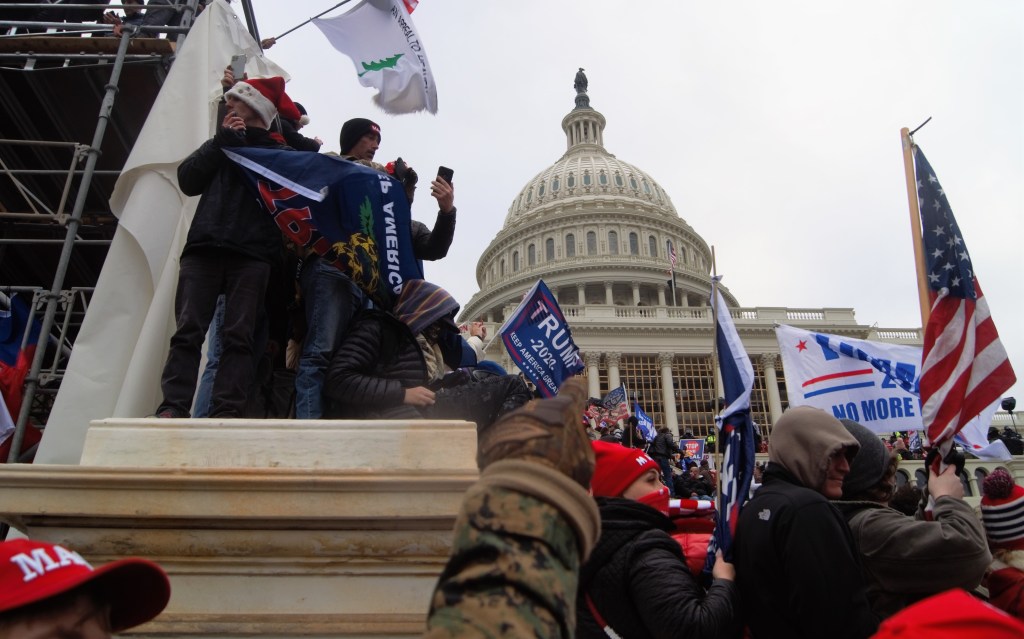
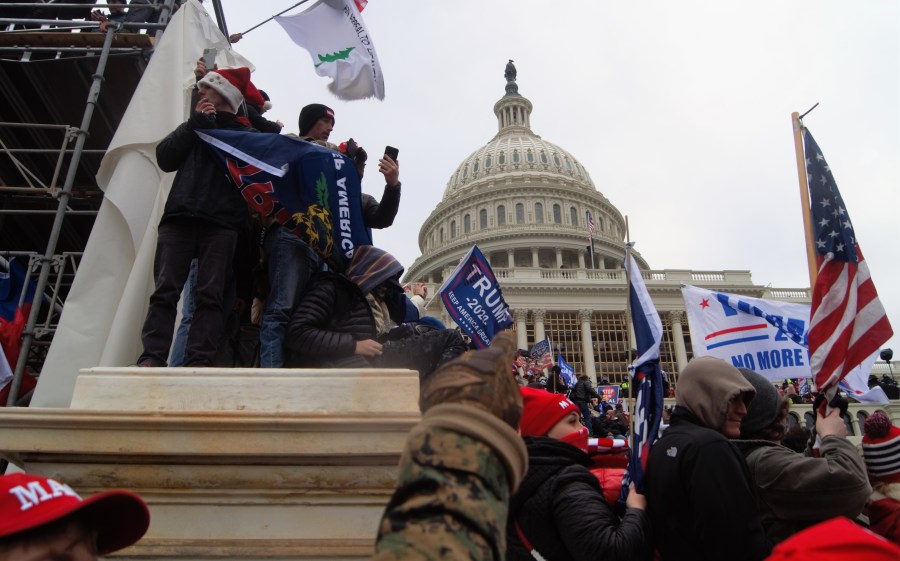
Some describe the Jan. 6, 2021 storming of the U.S. Capitol as an attempt to overthrow the government.

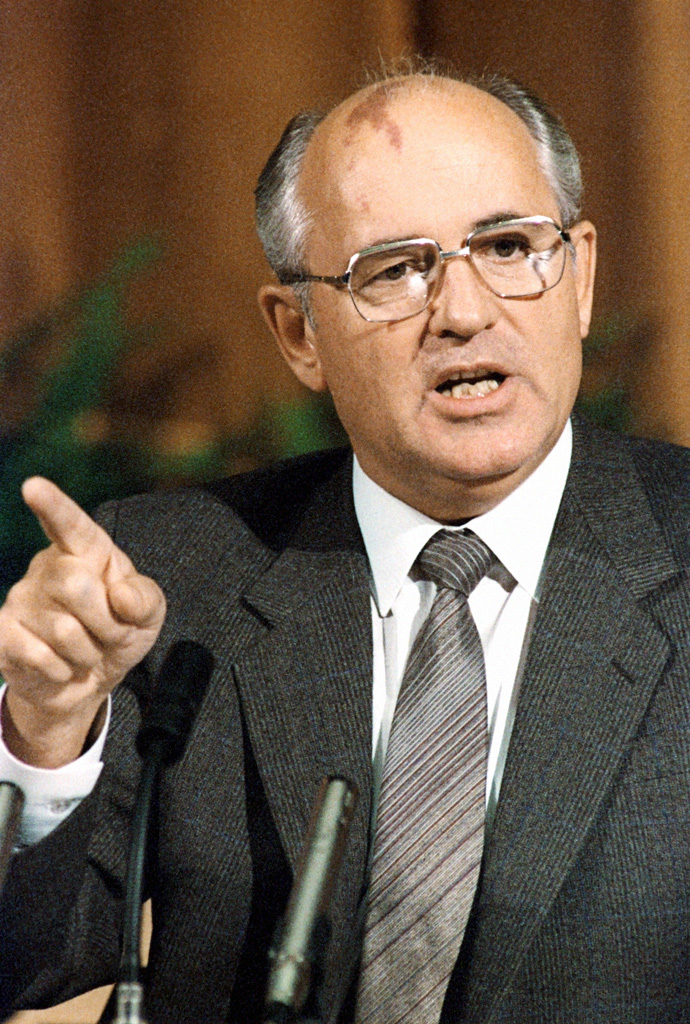
On Aug. 20, 1991, the Soviet government was preparing to sign a treaty that would have changed the relationship between the central government and the republics of the Soviet Union. The force behind this agreement was Mikhail Gorbachev, the man in charge, who along with a group of loyal followers wanted to change just about everything.  He was in the process of creating a new form of government that he had been working on since 1985, and his goal was an entirely new economic and military approach.

The 1991 Soviet coup d’état attempt, also known as the August Coup, was a failed attempt by hardliners of the Soviet Union’s Communist Party to forcibly seize control of the country from Mikhail Gorbachev, who was Soviet President and General Secretary of the Communist Party at the time.

Gorbachev envisioned a non-militaristic, non-autocratic, and globalistic liberal form of government driven by an entrepreneurial spirit like most of the rest of the world. He was convinced that the old Communist approach was doomed to failure. At the same time, he harbored the concept that he could preserve Communism in some form, but he was not too clear on that. He knew that the constant drain of funds to support all of the poor and gradually getting more poor republics would lead to inevitable failure of the government, and he was prepared to turn the dependent client states loose to fend for themselves. He had tried all sorts of approaches to turning around his country and one of his schemes was to end rampant alcoholism without considering that it was a major source of income to run the government, and this decision just added to the increasing economic woes.

The Soviet leader also was convinced that the military industrial complex was a major cause of economic disaster and he did everything he could do to derail attempts to spend increasing funds on defense in general and space weapons in particular. His goal was not only conventional disarmament, but also the elimination of all nuclear weapons. Strangely enough, there was at least one other person in the world that agreed with the nuclear part of his plan, and that was President Reagan, but that is a different story, so back to the overthrow.

A group of eight high-level Soviet officials put together a plan to take over the government and put a stop to any treaty that would lead to the end of the Soviet Union. They waited until it was almost too late and they did not really think through how exactly they would manage to run their new government. Nevertheless, with only two days to go, five of them showed up at Gorbachev’s vacation home in Crimea. Their plan was to convince him to sign an emergency declaration that put would put them in charge of the government.

One of the most important participants in this coup was Oleg Baklanov, the head of the military industrial complex and a man dedicated to restoring the global space leadership that they had demonstrated beginning with Sputknik in 1957. He believed that the Soviets had managed to let the Americans take over with the latest move being Reagan’s SDI that he believed could easily be handled if he were allowed to get on with running the show.  He was convinced that he knew how to win this latest form of technical competition and his approach was to develop and deploy their own death star, called Polyus, which would control space. The only issue was that Polyus had crashed into the Pacific after its launch in 1987, but only because of a minor software glitch, and Baklanov was not ready to give up on his engineer’s technology approach to problem-solving.

Baklanov had a running battle with Gorbachev and tried to persuade Gorbachev that he really had a better idea based on the superior scientific and engineering capabilities of the military R&D branches of the government. After many attempts to get his way, he concluded that Gorbachev cared little and barely understood the miracles of Soviet technology and was driven by his own political philosophy. Baklanov thought at least half of the military technical advantages were already devoted to the non-military needs and were best managed by stepping up military spending rather than somehow turning over the economy to a free and non-governmental form of big business.

When the coup plotters confronted Gorbachev, Baklanov later claimed in his oral history that Gorbachev “was dressed in a sweater although it was hot outside … to emphasize that he really was sick … became rather emotional and I saw a dull man thinking in a dull way about himself, rather than the matter at hand … and said he would sign the treaty even if they cut off my legs.”

The plotters left without any agreement and headed back to Moscow to “make arrangements” including getting Boris Yeltsin to go along with their plan, but that was not to be.  When Gorbachev returned to Moscow few days later still wearing that same sweater, he found that the coup plotters had ordered tanks and military to take over and enforce their coup.  Yeltsin then called on the public to strike and protest the coup. Yeltsin climbed on a tank, and with a megaphone and demanded the coup be defeated, and when the military refused to fire on the crowds, the coup was essentially over in three days and the plotters were arrested. Some spent time in prison but were released after an amnesty was declared in 1994. Gorbachev’s chief military adviser who had signed up with the coup committed suicide when it failed. An active coup plotter, Boris Pugo, along with his wife also took their own lives.

Gorbachev agreed with Yeltsin to abolish the Communist party, and in December the hammer and sickle flag was lowered, but then what? What was the outcome of a new freedom with lots of influence from the West? It is reported that without the law and order of the old government, the mafia that had been created when Gorbachev got rid of vodka took over and a new approach to big business emerged with oligarchs in charge.

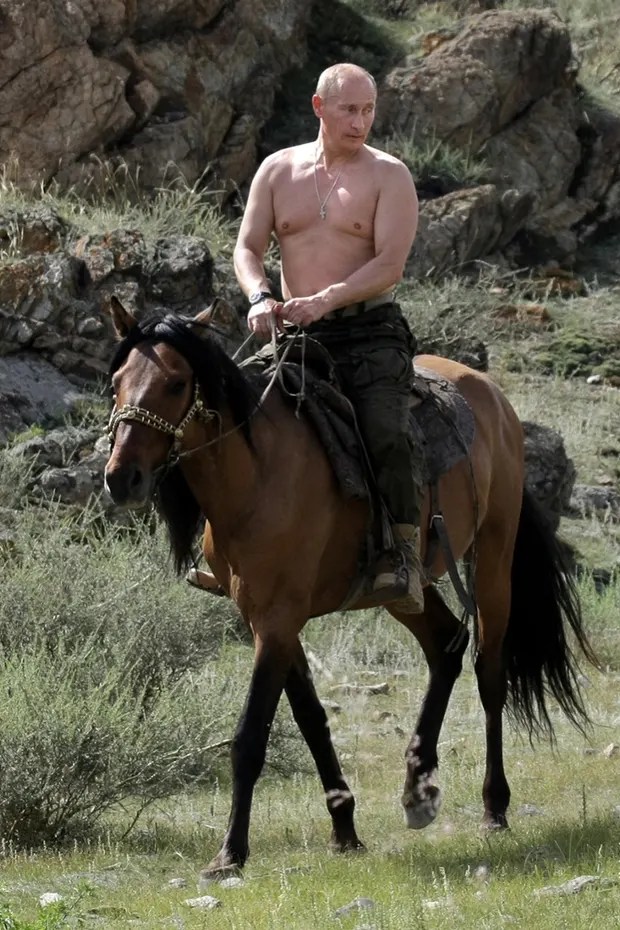
Russian President Vladimer Putin poses for photos riding on horseback while shirtless.

Violent uprisings were not uncommon, and the government went into a multiyear economic and social collapse. Then Putin, with his KGB backing, rode shirtless on his horse to the rescue in 1999 by restoring law and order and increasing autocratic control. Putin believed that the collapse of the Soviet Union was “the greatest geopolitical catastrophe of the century.” His attempt to regain control of the Soviet republics has resulted in today’s rapidly evolving war in the Ukraine, and a renewal of the conflict between the West and Russia with consequences yet to be determined.

So what did I conclude from all of this history story? Certainly we are not Russia, and we have resilient institutions that work well under stress.  Not surprisingly, I believe an orderly transition of power that reflects the will of the governed is a rather good idea. When the rule of law and reasonable people make the transition decisions in a cooperative manner, it is better than a disorderly overthrow of the government. Had it happened here, we might have seen the lessons of Soviet history revisited on our own shores.

Liar, liar, pants on fire

The presidential impeachment hearings are a good example of one aspect of human behavior that I studied recently, when I was involved in a science and technology advisory panel. The question we addressed was: What methods can an observer use to determine if a witness; or if there are two opinions, which side; is credible when they give contradictory answers? It would be wonderful if we really had some method as we watch what is going on in Washington.

In the hearings, the Republicans accused the Democrats of “making false allegations.” The Democrats similarly accused the Republicans of “making statements that ranged from incomplete renditions to outright falsehoods.” Trump tweeted that “the Democrats are liars” and a senator called Schiff “the worst liar in politics.”

The purpose of the panel I served on was to determine if there were technical methods to determine if a subject was telling the truth. Our panel determined that the gold standard of deception detection was the polygraph that measured blood pressure, pulse, respiration and skin conductivity while the subject answered a series of questions. What we discovered from interviewing many experts in the field was that the test really determined a psychological stress response that could be characteristic of a guilty answer, or a response from an innocent person who feels intimidated or even no response at all. In other words, the results were not reliable.

There were also examples in the press of use by the CIA on Guantanamo detainees of sleep deprivation and water boarding to elicit confessions, but they were also found to be not useful and deemed a form of torture. Acute stress induced by torture was also found to destroy memory. From our discussions with professional interrogators, the one approach that seemed to work was to have extensive prior knowledge and then intimidate the subject in order to induce a confession. An expert at interrogation knew how to use psychological methods to condition a person to “spill the beans” with no gadgets at all.

So what does this have to do with my supposed knowledge about missile defense? One of the most controversial and contradictory aspects of my more than 50 years of participation in the technical community  was the response to President Reagan’s request in his national security speech March 23, 1983. Reagan asked the “scientific community…to turn their great talents …to give us the means of rendering these nuclear weapons impotent and obsolete” … to “intercept and destroy strategic ballistic missiles before they reached our own soil or that of our allies.” His speech was the starting point of my several years involved in trying to satisfy his request by first helping to make a plan for, and then participating in, the Strategic Defense Initiative (SDI) as its first Chief Scientist.

Many years later, L. Wood, a primary representative of the Lawrence Livermore National Laboratories’ proposed X-ray laser program, told science writer J. Hecht, “SDI (AKA Star Wars) was a brilliantly successful bluff…illusion of an awesome technological capability.” Wood said, “I got the results I wanted. The Soviet Union collapsed.”

If there was an intentional hoax, Wood and others sure had me fooled since I was convinced nobody was bluffing. In my opinion, Reagan hated nuclear weapons as much as he hated Soviet Communism, and he believed we could find a way to defend ourselves, that is if we jointly managed a transition to eliminate nukes and then share a defense system. I became convinced that in fact SDI had little impact on the Soviet Union that went bankrupt on their own without our help through their society riddled with deception, mismanagement and moral confusion.

But what about the truth of the SDI? Gorbachev told the Politburo, “Our main goal now is to prevent another new stage in the arms race from taking place. If we do not do that, the danger for us will grow … an arms race that is beyond our strength. We will lose, because now for us that race is already at the limit of our possibilities.” There is no question that Gorbachev was a believer, even though his advisers, such as Evgeny Velikhov, the principal Soviet scientific leader, claimed it was a delusion.

At the same time, Gorbachev’s Military-Industrial Commission advisers told him, “Americans think that a multi echelon missile defense system should allow, at most 0.1 percent of the attacking missiles to get through” and their belief was that the key for missile defense would be “a new type of nuclear weapons consist of transforming part of the energy from a nuclear explosion into powerful streams of directed x-rays or electromagnetic radiation or stream of high energy particles…capable of striking in space or from space ballistic missiles, their warheads, satellites and the targets …at distances of several thousand kilometers.” The advisers added, “Full scale of these weapons is expected to occur in the second half of the 1990s.”

The head of their nuclear programs, Victor Mikhailov, was so convinced that nuclear directed energy was a realistic future possibility that he argued to stop such work that he called the “Evil Jinn.” There was no lack of conviction in the Soviet Union that directed nuclear weapons were critical to the success of the SDI program, even though at the time, Donald Kerr, the head of Los Alamos argued it was an exaggeration, Bud McFarlane, Reagan’s National Security Advisor, said the program was a “sting,” and much latter Reagan’s scientific adviser, Jay Keyworth, even called the work at LLNL “unadulterated lies.”

So what about the lying liars, whether it be in Congress, among scientists, weapons developers and politicians? In my opinion, the best expert on the subject is George Constanza from the television series “Seinfeld.” His memorable quote was, “It is not a lie if you believe it,” and I believe he is right.

Trust me.