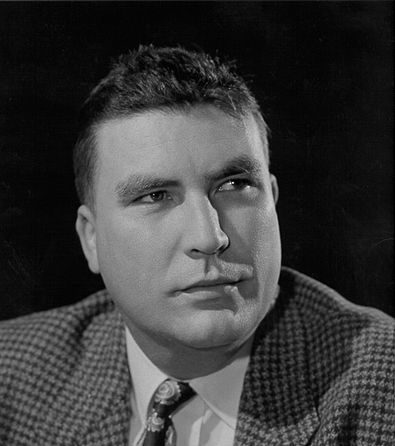
One of the military technology as well as arms control leaders at the end of the last century was Herb York. He always argued for weapons technology development based on good physics, and at the same time emphasized arms control based on mutual understanding between the U.S. and our adversaries. He made it clear in his 1995 book, “Arms and the Physicist,” that arms control agreements were hampered by the “fallacy of the last move.” He wrote, “We are confronted by the dilemma of steadily decreasing national security … this dilemma has no technology solution.”
I had reached a similar conclusion ten years before that. After Reagan called for the initiation of the missile defense “Star Wars” program, the Fletcher panel was organized in the summer of 1983 to create and document a plan of action. I was asked to put together a sub panel on directed energy weapons that were thought to be the source of the next “technology miracle,” and after we completed our effort, I was asked by Fletcher to write a conclusion of the study. I wrote: “We concluded that a robust BMD system can be made to work eventually. The ultimate effectiveness, complexity, and degree of technical risk in this system will depend not only on the technology itself, but also on the extent to which the Soviet Union either agrees to mutual defense arrangements and offense limitations, or embarks on new and more desirable strategic directions in response to our initiatives. Since the outcome of the initiation of an evolutionary shift in our strategic direction will hinge on as yet unresolved policy as well as technical issues…no definitive predictions of the outcome can be made.” The end of the last sentence was not published. Instead, what was advertised was that “a robust BMD system can be made to work eventually.” The notion that the outcome was not only uncertain, but depended on the next move of our adversary did not see the light of day.
The history of military technology has taught us that the development of weapons is always followed by the development of counter weapons. We can learn from the history of the army’s battlefields that the infantry changes, from the machine gun to barbed wire and trenches, to tanks, to anti-tank weapons, to hardened armor, to defensive shields… and on and on. Space weapons will be no different, and will be dominated by sensors and anti-sensor weapons, be they blinding lasers or command and control hackers, and hyper-sonic missiles. The game will go on and on, but the predictability of the outcome will be obscured by the complexity of the actions and the reactions.
The technology marketers will improve their methods to persuade the poorly informed decisions makers that their latest inventions will provide certain victory. The end game, however, will be elusive and will be dependent on not just technical, but social, political, economic and psychological factors.
Will our future consist of an endless arms race or are there more beneficial ways to invest our nation’s increasingly limited financial resources? I believe we should take our guidance from history. Some of the scholars of the end of the Soviet Union argue that the SDI technology advances allowed us to win the arms race with the Soviet Union; however, as I wrote in my book, “Death Rays and Delusions,” the collapse of the Soviet empire was caused by its “moral decay and mismanaged political institutions rather than economic collapse or even scientific and technology competition.” We should learn from history to warn of us of our own social/political and impending cash flow problems as our population ages demanding more and more of available funds, compounded by the return to normal interest rates. I call this the “geezer threat,” and I believe we urgently need to figure out how to deal with the inevitability of “global aging.”
 SDI Guy
Hi Gerry, Though I don’t know diddilysquat about weaponry, your conclusion makes sense to me. What if we spent $5 billion dollars on meeting the needs of immigrants, providing shelter, food, and teaching them skills to earn a living and serve society? We could build a strong trained team of caregivers for the elderly. Address our problems as well as those of the people fleeing for their lives. Why can’t we be creative instead of repeating the same old mistakes? Darned if I know. I hope you and Jane are having a good holiday season. Oleta ________________________________ From: SDI Guy Sent: Sunday, December 23, 2018 4:42 PM To: oletasaunders@msn.com Subject: [New post] “The Fallacy of the Last Move”
gyonas posted: “One of the military technology as well as arms control leaders at the end of the last century was Herb York. He always argued for weapons technology development based on good physics, and at the same time emphasized arms control based on mutual understand” Respond to this post by replying above this line
New post on SDI Guy [https://sdiguydotblog.files.wordpress.com/2017/07/cropped-fullsizerender.jpg?w=32] [http://2.gravatar.com/avatar/e9b3d33ffcce264f3f033f5d0bb3ab4c?s=50&d=identicon&r=G] “The Fallacy of the Last Move” by gyonas
One of the military technology as well as arms control leaders at the end of the last century was Herb York. He always argued for weapons technology development based on good physics, and at the same time emphasized arms control based on mutual understanding between the U.S. and our adversaries. He made it clear in his 1995 book, “Arms and the Physicist,” that arms control agreements were hampered by the “fallacy of the last move.” He wrote, “We are confronted by the dilemma of steadily decreasing national security … this dilemma has no technology solution.”
I had reached a similar conclusi
LikeLike
Yes, the weapons development “game” will go on and on as evidenced by the fact that nuclear weapons continue to proliferate in the world along with research on advanced delivery systems. Extension to weapons in space is the next step. We continue to spend money on weapons ignoring the need for resources to extend affordable health care, education and housing to all our citizens. The number of homeless people on our streets is evidence of the sad situation in this country.
The U.S. is not the only country that has a “geezer” threat. China, India, Russia, Germany, France, etc. all have an aging population. Ms. Saunders’ suggestion that immigrants form a potential labor force for elderly care is worth considering. That would require a change in our immigration laws, something that Congress has been unable to agree on.
LikeLike
Could not connect with your server for comments!
“Poorly informed decision makers …”. It would make no difference how well informed they might be. They are fairly uniformly incapable of understanding or judging objectively among divergent statements from sources that are equally credible to them. Or they are confident that they know more and have better judgement than everyone. Else why would they have been elevated? I have served many high level decision makers, and there were only two who would accept advice directly from trusted and experienced experts.
Dave
Sent from my iPad
>
LikeLike
The best decision makers are good listeners who are willing to ask the right questions and then make decisions based on logic coupled with the wisdom of experience. The most dangerous deciders don’t learn and then jump to uninformed conclusions based on emotion of the moment.
LikeLike
Apart from the issues raised on the future for arms technology there intrude questions on the allocation of economic resources for the general welfare of civil society. How to address the health care needs of an aging population is posed a distressing, and costly, dilemma. Attending the health needs of the elderly has LESS to do with trade-off on defense, than on the cost of self-inflicted harms from careless and wanton life styles. Nearly 20 percent of US GDP derives from healthcare. More than 13 million jobs are in the sector. And it is the most rapidly rising source of future employment projected to add 1.6 million jobs…and NOT from care for the elderly.
Annually there are multi-million medical procedures and multi-million hospital days from medical required care diagnosed from chronic life-style induced disorders. Mental disorders mount and account for more than $200 billion in costs and is the 3rd most hospital care cost factor; from 1999 to 2017, 218,000 people died from over-doses related to prescription opioids while an estimated 1.9 million people suffered from substance use disorders and the epidemic cost the economy $504 billion in 2015; obesity reach $51.64 billion for direct medical costs in 1995 and medical care included 89.5 million bed-days, and 62.6 million physician visit; diabetes diagnosed persons affects 25.8 million people, 8.3% of the population. Cost of diabetes in 2007 was $116 billion in medical care. AND THIS IS THE TIP OF THE ICEBERG. Medical care dwarfs the arms budget. Nor do we need immigrants for care for the elderly. Reorganizing care giving and social innovation in the application of technology…yes! including care giver robots will readily address this relatively minor social problem sector.
LikeLike
Geezer health care cost data: Just had my cataracts removed and new lenses inserted. Waiting room jammed with geezers. They looked old but sober. Surgeon does 30 patients per day. My surgery took 5 minutes. The bill was 10k, medicare insurance paid 3k, My cost was $150.
LikeLike
More health care cost info: U.S. cost in 2017 was $3.5T projected to grow to $5.7T by2026 and 19.7% of GDP. (Advisory Board). Hospital care 2026 projection: $1.8T.
Will the young pay the bill for the old? Will other expenses be cut?
LikeLike