Herbert_York

“The Fallacy of the Last Move”

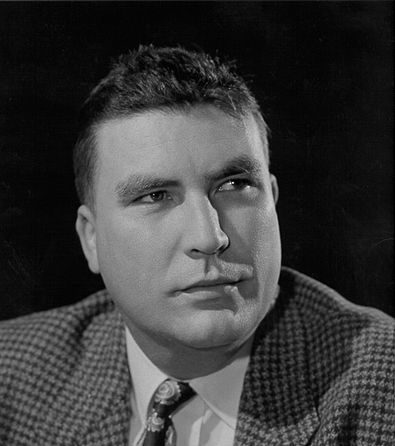
One of the military technology as well as arms control leaders at the end of the last century was Herb York. He always argued for weapons technology development based on good physics, and at the same time emphasized arms control based on mutual understanding between the U.S. and our adversaries. He made it clear in his 1995 book, “Arms and the Physicist,” that arms control agreements were hampered by the “fallacy of the last move.” He wrote, “We are confronted by the dilemma of steadily decreasing national security … this dilemma has no technology solution.”

I had reached a similar conclusion ten years before that.  After Reagan called for the initiation of the missile defense “Star Wars” program, the Fletcher panel was organized in the summer of 1983 to create and document a plan of action. I was asked to put together a sub panel on directed energy weapons that were thought to be the source of the next “technology miracle,” and after we completed our effort, I was asked by Fletcher to write a conclusion of the study. I wrote: “We concluded that a robust BMD system can be made to work eventually. The ultimate effectiveness, complexity, and degree of technical risk in this system will depend not only on the technology itself, but also on the extent to which the Soviet Union either agrees to mutual defense arrangements and offense limitations, or embarks on new and more desirable strategic directions in response to our initiatives. Since the outcome of the initiation of an evolutionary shift in our strategic direction will hinge on as yet unresolved policy as well as technical issues…no definitive predictions of the outcome can be made.” The end of the last sentence was not published. Instead, what was advertised was that “a robust BMD system can be made to work eventually.” The notion that the outcome was not only uncertain, but depended on the next move of our adversary did not see the light of day.

The history of military technology has taught us that the development of weapons is always followed by the development of counter weapons. We can learn from the history of the army’s battlefields that the infantry changes, from the machine gun to barbed wire and trenches, to tanks, to anti-tank weapons, to hardened armor, to defensive shields… and on and on. Space weapons will be no different, and will be dominated by sensors and anti-sensor weapons, be they blinding lasers or command and control hackers, and hyper-sonic missiles. The game will go on and on, but the predictability of the outcome will be obscured by the complexity of the actions and the reactions.

The technology marketers will improve their methods to persuade the poorly informed decisions makers that their latest inventions will provide certain victory. The end game, however, will be elusive and will be dependent on not just technical, but social, political, economic and psychological factors.

Will our future consist of an endless arms race or are there more beneficial ways to invest our nation’s increasingly limited financial resources? I believe we should take our guidance from history. Some of the scholars of the end of the Soviet Union argue that the SDI technology advances allowed us to win the arms race with the Soviet Union; however, as I wrote in my book, “Death Rays and Delusions,” the collapse of the Soviet empire was caused by its “moral decay and mismanaged political institutions rather than economic collapse or even scientific and technology competition.” We should learn from history to warn of us of our own social/political and impending cash flow problems as our population ages demanding more and more of available funds, compounded by the return to normal interest rates. I call this the “geezer threat,” and I believe we urgently need to figure out how to deal with the inevitability of “global aging.”

 

Voltaire

Are you smoking something?

One of the readers of my latest couple of blog posts asked me if I was smoking funny cigarettes. I don’t think he appreciated my satire. I really did not know I was in the satire business, until one of the readers of my book, “Death Rays and Delusions,” commented that I was trying to be another Voltaire. Being an engineer, I thought that was an automobile model, (perhaps a Chevy), so I looked it up and found Voltaire was a 16th century philosopher who poked fun at political leaders using a style characterized by wild exaggeration, irony and subtle humor. In my recent blog posts, I poked fun at the obviously silly idea of a new branch of the military, the space force. I knew enough about the subject that I figured the Air Force already had the job well in hand so I opined that one financial benefit would be the use of the surplus uniforms left over from the Star Trek TV series. My other post dealt with the concept that we could dominate space control through investing in new and revolutionary technologies.

In my book, I described the outrageous notions that we could defend ourselves against the threat of nuclear tipped ballistic missiles if we only had to deploy hundreds of giant space-based lasers, or thousands of tiny missiles, or maybe just a few orbiting nuclear weapons to create beams of x rays. When I was the chief scientist of the SDI program, I enjoyed the satirical humor in the “Bloom County “cartoons where I was described as a plump penguin who argued, “Why fer crying out loud…. research physicists need Porches too.”

Maybe the message of my book was lost in the satire, but my point was that decisions were being driven by the tech sales forces of the military industrial complex. They were extremely successful in extracting large sums for unlikely programs, that turned out to be the heart of an elaborate mind game with the Soviets.

The policy decision makers on both sides had no clue about the reality of the technology, but they were mostly motivated by their own philosophical, strategic and economic concepts. Gorbachev hated nukes, the arms race and the impending financial collapse of the Soviet empire. Reagan hated nukes, believed the Soviet Union was on the edge of financial extinction and was willing to make a deal that even shared our technology with the Soviets.

As it turns out, scientists and engineers were involved, but were only along for the ride. Many of them believed that their next miracle would give us the winning move.

Remembering the legacy of George H.W. Bush

“It would not be prudent at this juncture.”

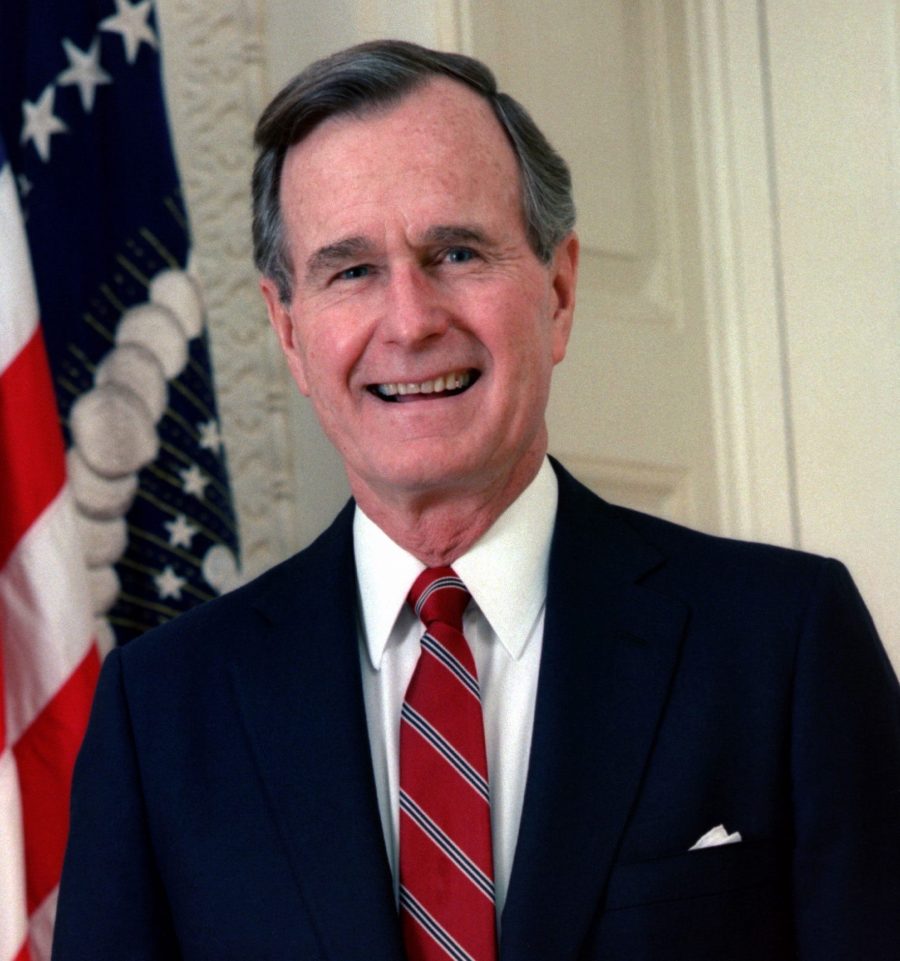
On “Saturday Night Live,” comedian Dana Carvey, impersonated President George Herbert Walker Bush with the memorable line, “it would not be prudent at this juncture.” It was not only humorous, but an accurate description of the thoughtful approach, as well as the personality and character of the man who I had interacted with when I was the Chief Scientist of the SDI.

Reflecting on the man after his recent death, I recall the way he acted with prudence after the implosion of the Soviet Union. On Sept. 28, 1991, Bush announced his strategic nuclear weapons plans. He wanted to curtail further deployment of all nuclear tipped nuclear weapons. He wanted to limit all of our ICBMs to single warheads in order to avoid any perceived benefit from a first strike and to negotiate a posture of convincing deterrence. Part of this strategy was that there not be any sort of global missile defense as proposed by Ronald Reagan. He did recognize the growing proliferation of short-range ballistic missiles, and he called for developing and deploying limited defenses that would still be effective against the growing threat from rogue states.

His approach in 1991 was to maintain deterrence based on threat of mutual assured destruction while assuring the Russians that we had no intention of defending ourselves against their ability to retaliate. He had not changed his point of view from that when I met with him six years earlier. He had been asked by President Reagan to visit our allies and negotiate agreements with them to join us in a giant R&D program. Secretary of Defense Caspar Weinberger offered the allies prospects of lucrative contracts and technology sharing if they would sign on to supporting our SDI program.

I was asked to go along on the trip and provide low key technical back up to the negotiations. Bush invited me to visit him in his office and give him a one-on-one briefing on the program. He was cordial, informal and a good listener, but he obviously was not interested in details. We sat in overstuffed leather chairs next to a coffee table that had a signed picture of his previous vice-presidential opponent Gerry Ferraro. I noticed his plaid watch band that struck me as what would be expected of a prep school high school student and we chatted back and forth as if we were old friends.

After we talked, he asked me to come on over for dinner and continue the discussion with some of his friends. The old friends were all distinguished members of the political strategic weapons community and after dinner we went around the table and shared thoughts with the vice president.  All of the comments about SDI ranged from mild disagreement to outright opposition.

Harold Brown, former secretary of defense under Jimmy Carter, said “SDI is not a very good idea…it is a mistaken commitment to a real gamble.” Other comments basically argued that this program would mess up our relations with the allies that Bush would face on the trip. After listening to all of the opinions without comment, he closed the discussion by saying, ‘This is a listening trip…. not an SDI trip…this is a prudent step.”

I still thought the trip was on and even bought a new suit for the trip, rather than the threadbare one I had worn to dinner, but I soon learned that Reagan had decided to focus the trip on counter terrorism, not SDI, and my services were no longer needed. I should have realized that Bush believed that the trip was “not prudent at this juncture.”

With his calm, careful and thoughtful approach, Bush never sought nor received much attention in the Reagan administration, so it was not obvious at that the time that he was destined for greatness. When he was elected as President, he provided honest and clear-thinking leadership that served our nation well. He will be recognized as one of our greatest Presidents and we sure could benefit from a George Herbert Walker Bush in the White House today.

signs

From no collusion to no collision: a new motto for Space Force

No collision, no collision, no collision.”

 
One of the most certain ways to destroy one of our satellites is for the bad guys to track any of our satellites from the ground and then launch a guided missile into its path. The resulting collision will destroy both objects and spread a tremendous amount of debris into already crowded orbits, so a good motto for the new Space Force is “No Collision.”

 
We might even use the motto on our Space Force uniforms modified from the left over Star Trek uniforms as I suggested in my last post. When the president’s goal of space dominance is achieved, we will of course have to be ready to overpower all of those other nations who have ambitions of using space for their own commercial and military applications and they might not be ready and willing to go along with us. So we will have to establish and enforce our own “Space Rules of the Road.”

 
Liberals have suggested that there should be global rules of the road in economics and I can imagine the Anti-Space Dominance (ASD) advocates suggesting something similar for space. Their ideas would include shared beliefs and accepted rules of behavior such as free trade of products involving space hardware and satellites, minimal application of military power (except to police the bad guys) and trusted investments and business agreements. If we are not willing to go along with this sort of mutually assured survival (MAS) with a live and let live approach, we will need to enforce our dominance of space. Our control of space would then be great again–like it used to be before others decided to compete.

 
Claiming that the Russian and Chinese are already moving ahead with space weapons, the president and vice president have called for “American dominance of space” so there will absolutely be no collision. I can imagine what comes next. We will create a space club and we will collect dues and make sure everybody knows our rules so that they all will all be protected from direct attacks and any space debris or even jamming, blinding or destruction from directed energy weapons. We will own all of the orbits and charge rent for their use. The law of space will be our law, our space, our territory over the entire world and nobody will be allowed  to launch rockets without our permission . Our space warriors will live in fabulous huge orbiting space towers so they can keep an eye on  the various other countries who may threaten us. We will build space hotels and charge visitors from other countries sky-high fees to stay there. Yes, I can see it now … America will achieve total space domination with no collision and we will set our own rules of the road. It will be my way on the space highway. No collision… total dominance… and peace and prosperity for all.